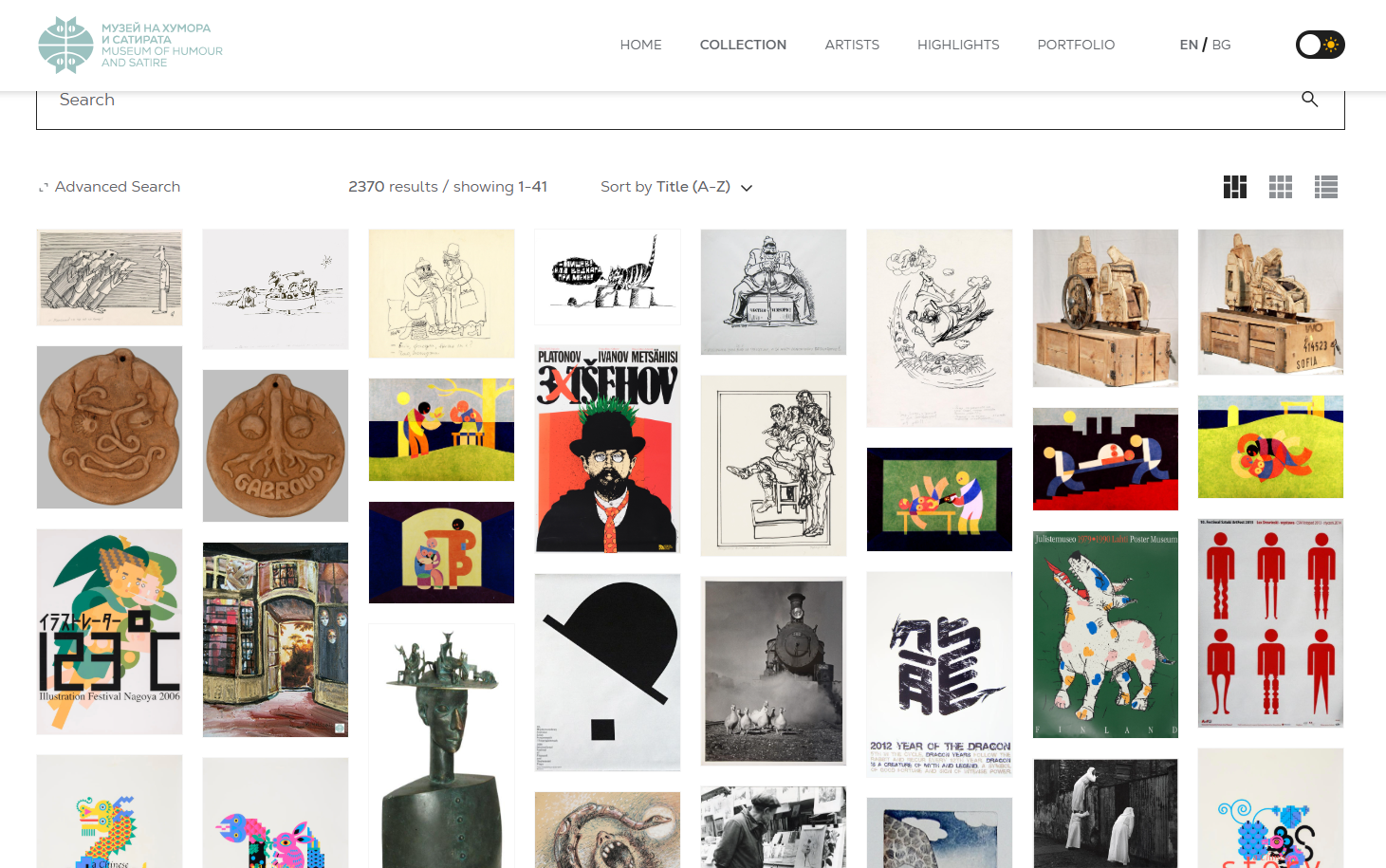
As part of the project “Digital House of Humor and Satire: Art from 170+ Countries over the Last Century”, funded by the National Culture Fund, the Museum has opened public online access to its Collection.
The Digital Catalog is now available here and includes selected works from the Art Collection – Cartoons, Graphics, Paintings, Graphic Posters, Sculptures, Photography and other forms of Visual Art.
The Catalog is updated daily in the process of digitization.
The platform is bilingual (BG/EN) and is built on the MuseumPlus system, implemented in the Museum in 2024.
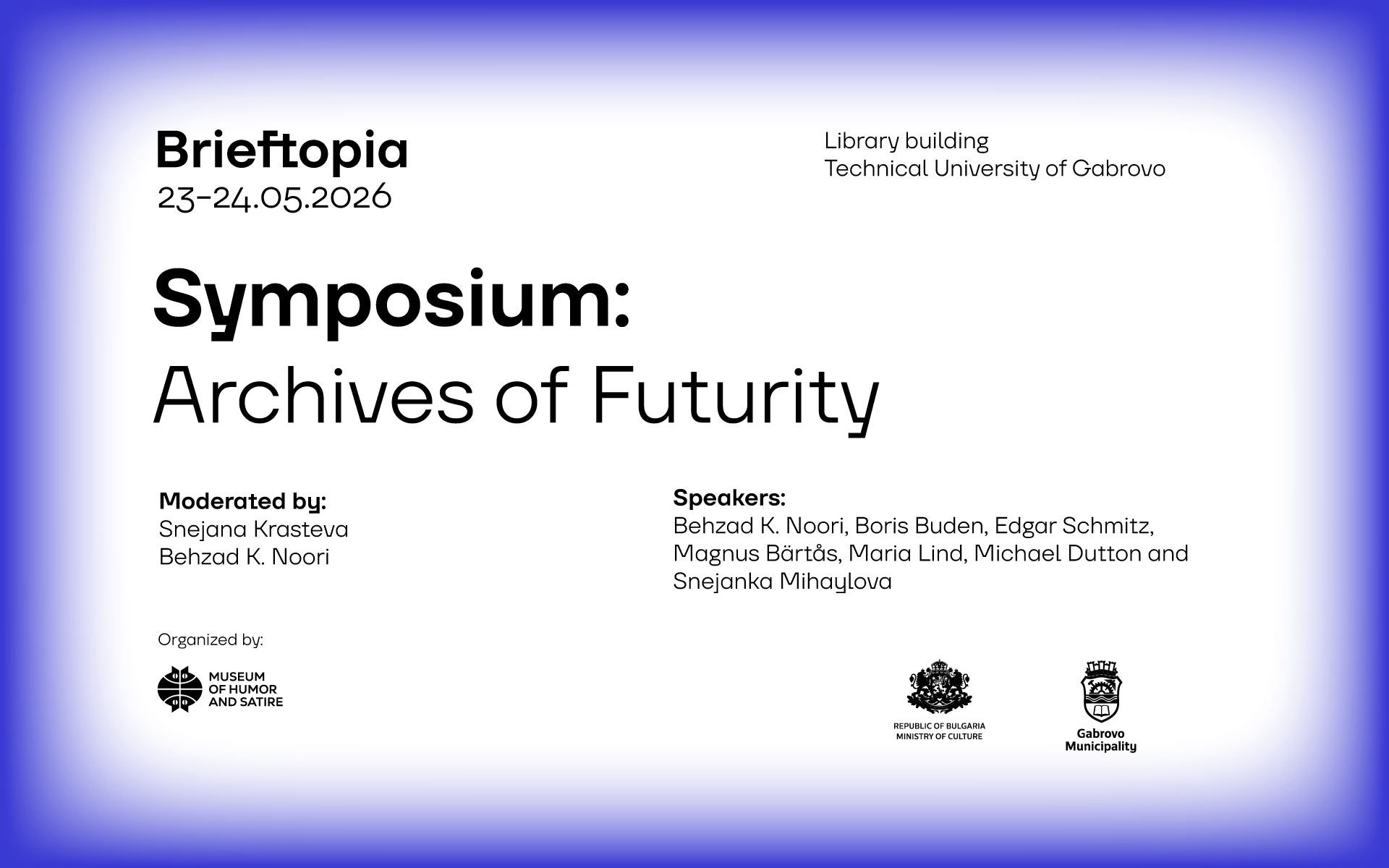
Speakers: Behzad K. Noori, Boris Buden, Edgar Schmitz, Michael Dutton, Magnus Bärtås, Maria Lind and Snejanka Mihaylova
Moderated by: Behzad K. Noori and Snejana Krasteva
Organized by: Museum of Humor and Satire, Gabrovo
Location: Library building, Technical University of Gabrovo, Hadji Dimitar Str N4
In preparation for the 26. Gabrovo Biennial of Humor and Satire in Art 2029, we invite you to take part in the 2-day transdisciplinary Symposium “Brieftopia: Archives of Futurity”.
The Symposium brings together artists, curators, scholars, and researchers from local and international contexts to collectively reflect on the concept of brieftopia, a term coined by Behzad K. Noori to describe fleeting yet tangible utopian moments that emerge within the connection between hope and hopelessness.
The Symposium will take place in relation to the exhibition that opened earlier this year, in March 2026, “Brieftopia: Art between Crisis and Imagination”, which explores hope as a fragile, paradoxical force that persists in direct connection to the imagination. Brieftopia proposes an archive of futurity as a brief moment when imagination and resistance encounter. The Symposium seeks to explore diverse notions of Brieftopian thinking and practices as a method of future investigation that resists monumentalisation.
The Symposium and the Exhibition together are the point of departure for planning the 2029 Gabrovo Biennale, curated by Snejana Krasteva and Behzad K. Noori, positioning Gabrovo as a site for experimental thought on imagination and the precarious politics of futurity. The both initiatives create a collective laboratory for rethinking futurity, and where Gabrovo becomes a site of practice of tangible future possibilities.
Download the Symposium brochure in PDF format >> here
IMPORTANT!
– The symposium will be conducted in English.
— Participation in the symposium is by registration only; space is limited.
– Travel expenses and accommodation are the responsibility of the participants. A preferential rate for accommodation at Hotel Etar (REMO Etar) has been arranged for the duration of the symposium. Please contact the email address below.
– If your plans change and you are unable to attend, please inform us promptly by email at exhibitiondesign@humorhouse.bg
With the support of the Ministry of Culture of Republic of Bulgaria
Symposium Program (*subject to change):
Saturday, May 23, 2026
(optional) *10:00–10:40 Curatorial tour of the exhibition “Brieftopia: Art Between Crises and Imagination” at the Museum of Humor and Satire
11:00–11:15 Arrival of guests at the library 11:15–11:20 Welcome by the Mayor, the Deputy Director of the Museum of Humor and Satire, and the moderators 11:20–12:00 Introduction and lecture by Behzad K. Noоri, “Brieftopia: Archives of Futurity” 12:00–12:40 Lecture by Boris Buden, “Can it laugh? Surviving with AI”
Coffee break 13:00–13:40 Presentation by Snejanka Mihaylova, “Diagonal Thinking” 13:40–14:40 Panel Discussion 1, followed by Q&A, moderated by Snejana Krasteva
Lunch 15:30–16:10 Presentation by Magnus Bärtås, “A Tower Taller Than Myself: a Brieftopian Experiment in a Prison”
16:10–17:50 Presentation by Maria Lind, “How far do we get with moments of magic?” 17:50–19:00 Panel Discussion 2, followed by Q&A, moderated by Behzad K. Noori
Sunday, May 24, 2026 10:00–10:15 Arrival of guests at the library 10:15–10:20 Introduction by the moderator 10:20–11:00 Presentation by Edgar Schmitz, “Trading in Brieftopia” 11:00–11:40 Presentation by Michael Dutton, “Moments of Communism” 11:40–12:40 Panel Discussion 3, followed by Q&A, moderated by Snezhana Krasteva Lunch and screening, followed by a discussion (Q&A) of the film essay “Brioni and Necromantic Theatre” by Behzad K. Noori and Magnus Bärtås 14:00–15:00 Symposium summary, discussion with all participants, followed by Q&A, moderated by Snezhana Krasteva and Behzad K. Noori Free program / organized visits to cultural landmarks in Gabrovo *(optional) Curatorial tour of the exhibition “Brieftopia: Art Between Crises and Imagination” at the Museum of Humor and Satire Visit to the Regional Center for Contemporary Art “Christo and Jeanne-Claude”, Gabrovo; meeting with the Director, Ms. Margarita Dorovska Visit to the Regional Ethnographic Open-Air Museum “Etar”
Synopsis of the lectures and short bio about the speakers (in order of presentations):
Behzad K. Noori, “Brieftopia: Archives of Futurity”
Brieftopia is a fleeting yet tangible encounter with futurity. It is persistence within exhaustion. In my talk, Noori will situate Brieftopia as both a concept and a method of thinking and practice that emerges from disillusionment yet refuses paralysis. Brieftopia is not an emotional retreat into nostalgia or a symbolic gesture, but a practice of surviving failure, a mode of living after defeat. Against the neoliberal capture of the future, where technology and consumption are framed as the primary vehicles of salvation and future, he proposes a critical interruption toward contemporary conditions that reduce futurity to repetition, a managed extension of the present, where imagination is replaced by purchasable images and speculative risk becomes the dominant temporal logic. Brieftopia emerges within this contraction as a counter-practice, proposing imagination as a lived, fragile, and collective act. Brieftopia is the final threshold before imagination turns real, yet it often passes unnoticed.
Behzad Khosravi Noori is an artist, writer, educator, and history-teller. His artistic practices include films, installations, and archival studies. His works investigate histories from the Global South, labour and the means of production, and histories of political relationships that have existed as a counter-narration to the East-West, North-South dichotomy. By bringing multiple subjects into his study, he explores possible correspondences seen through the lenses of contemporary art practice, proletarianism, subalternity, and the technology of image production. He examines contemporary history to revisit memories beyond borders, exploring the entanglements and non/aligned memories.
Boris Buden, “Can it laugh? Surviving with AI”
We don’t need to look much around to realize what a dire situation we are in: chaos, wars, environmental collapse … How to think of the future at a time when pure survival is at stake? Perhaps this is the moment to remember Walter Benjamin, who famously wrote that laughter is the only thing that helps us endure the abyss. He claimed, moreover, that there is no better starting point for thought than laughter.
As it is well known, artificial intelligence has become today an integral part of the reality in which we live. It is more than a new technological tool that might help us to survive. It is an agency supposedly able to think. But can it laugh? When asked directly, the AI answers: “If making a joke means ‘producing a text that causes a human to laugh,’ then yes. If it means ‘having a sense of humor or understanding why something is funny,’ the answer is currently no.” How to understand it, as a sign of hope, or rather of hopelessness?
Boris Buden is a writer, cultural theorist, and translator based in Berlin. Born in former Yugoslavia, he studied philosophy in Zagreb and received his PhD in cultural theory from Humboldt University in Berlin. Since the beginning of the 1980s, Buden has published essays and books on critical and cultural theory, psychoanalysis, politics, and contemporary art in Croatian, German, and English. He is a permanent fellow at The European Institute for Progressive Cultural Policies in Vienna and teaches at various universities in Europe. Recently published: Transition to Nowhere: Art in History After 1989, Berlin 2020.
Snejanka Mihaylova, “Diagonal Thinking”
Is it possible to think something anew, and under what conditions? Hannah Arendt poses this question in the preface to Between Past and Future, a book that serves as an important point of reference for Snezhanka Mihaylova’s lecture in the context of the notion of Brieftopia. The lecture begins with the idea of diagonal thinking, which considers time as a gap or interval.
In parallel, Mihaylova turns to one of her favorite texts by Paul Valéry, Eupalinos ou l’Architecte, a work situated between the creation of a concept and a theatrical play. Socrates and Phaedrus meet after the death of Socrates, or at the end of the time of their own lives, which they perceive as a flowing river. In the movement of the waters, lived experience is reflected through the prism of what has already been written — through Plato’s “Phaedrus”. Thinking emerges as a text within the text, or as an exploration of one’s own relation to the making of meaning. Valéry transforms the experience of understanding into a reversed flow of time, which can be explored as an architectural space.
In a further deviation, the lecture examines and juxtaposes this architectural space of reversed time through specific examples from the work of the Japanese architect Tadao Ando and the island of Naoshima in the Japanese archipelago — a place that has deeply captivated Mihaylova’s imagination. Approaching the subject in the form of a Brieftopic travelogue, the lecture reflects on questions of survival and the return to life after atomic catastrophe. Naoshima appears as an island where multiple scenarios for life after devastation come into being.
The lecture focuses on thinking as a creative practice. Through a series of gaps and deviations, it explores the possibility of art from the perspective of the future and the political promise contained within such a reversal.
Snejanka Mihaylova’s practice is grounded in performance and writing, as well as in long-term artistic research that approaches performance as a form of thinking and inquiry. Central to her work is the understanding that thinking is not solely internal or abstract, but emerges through relational, embodied, and acoustic experiences in acts of listening, voicing, and shared attention. In her recent work, Mihaylova develops the notion of thinking-in-assembly, a practice of collective thought that unfolds through co-presence, voicing, and attentive listening.
Magnus Bärtås, “A Tower Taller Than Myself: a Brieftopian experiment in a Prison”
The prison and the museum may appear as opposites. One is built to hide something, to separate us from something we don’t want to see; the other is built for visibility, to optimise visuality. Historically, these institutions arose at about the same time, and inside the key feature is common: the principle of observing. In the city of Kalmar, in the south of Sweden, there is only 500 meters between the two buildings, and the installation I created during six months together with six inmates establishes a relation between the prison’s confinement and the openness of the museum. The workshops at the prison included art presentations and discussions about crime and punishment, and we came to inspire each other in the construction of a meticulous work that materialises questions of power, surveillance, control, obsession, architecture, violence, and beauty. The whole situation that came about may be described as a brieftopia, a situation that, according to Behzad Khosravi Noori, can be compared with an intermezzo – a sudden opportunity to break a pattern and create something radically different. Brieftopia is driven by a utopian desire but rejects the placelessness that characterises utopian thinking. The work became a temporary refuge from reality and simultaneously something very real, a creation of a strange topography, a city of towers larger than ourselves.
Magnus Bärtås is an artist, writer, professor in fine arts, and head of research at Konstfack, working mainly with text, video, and installation. His dissertation in artistic research, You Told Me – Work stories and video essays, was presented in 2010 at the University of Gothenburg. Hewon the Grand Prize at the Oberhausen International Film Festival in 2010, and in 2024 he won, together with Behzad Khosravi Noori, the 1st prize of the Ministry of Culture and Science of North Rhine-Westphalia at the same festival. His works have been shown at the Gwangju Biennial, Moderna Museet, Stockholm, and Göteborgs Konsthall, among other venues.
Maria Lind, “How far do we get with moments of magic?”
Curator, writer and educator Maria Lind will address the question of “How far do we get with moments of magic?” through presenting and discussing three projects with which she has been involved: The TV Trampoline: From Children’s Television to Contemporary Art and Literature in Moscow, Kalmar, Umeå, Norrtälje and Kiruna, The Silent University by artist Ahmet Ögut at Tensta konsthall in Stockholm and The Benevolent Food in Kiruna.
Maria Lind is a curator, writer, and educator from Stockholm. She is currently the director of the Kin Museum of Contemporary Art, Kiruna. From 2020 to 2023, she served as the counsellor of culture at the Embassy of Sweden, Moscow. She was the director of Stockholm’s Tensta konsthall 2011-18, the artistic director of the 11th Gwangju Biennale, the director of the graduate program, Center for Curatorial Studies, Bard College (2008-2010), and director of Iaspis in Stockholm (2005-2007). From 2002-2004, she was the director of Kunstverein München, and in 1998, co-curator of Europe’s itinerant biennial, Manifesta 2 in Luxembourg.
Edgar Schmitz, “Trading in Brieftopia”
When the here and now is so marked by depletion and erasure that it starts trembling under the pressures of its excessive futures, it tends to strike new bargains with the past and bring the dead back into the shared spaces of now, before and after. Like most future-oriented practices, necromancing animates present, past, and yet-to-be worlds into volatile patterns of exchange.
This is often framed as apocalyptic, but it isn’t in itself that exceptional. Most civilisations (have long had to) trade their futures with the claims of the dead, their gifts and demands, in ongoing negotiations that are culturally mediated, collectively ritualised and individually enacted. To shape and face the future without negotiating it with the past would simply be preposterous in most cases.
(All cultures and civilisations command technologies that allow for zones of contact with the not-now and the not-here in multiple directions. History and storytelling are technologies in this sense; film, love, and emancipatory politics are others, variously enfolding and morphing the temporalities and spacings of available present/ past/ future constellations until they offer up new ways of inhabiting worlds.)
Edgar Schmitz’s architectures, films, and soundtracks are concerned with developing modes of withdrawal, the dispersed materialities of the choreographic, and the temporal shapes of (in-)animacy. His work has been shown in solo presentations at Netwerk Aalst, Shanghai Himalayas Museum, Cooper Gallery Dundee, FormContent and ICA, London, and has featured in A.C.A.D.E.M.Y at Van Abbemuseum, No Soul for Sale at Tate Modern, and the Hayward Gallery’s British Art Show 7, a.o. Schmitz is the founder of the CHOREOGRAPHIC and ANIMATE ASSEMBLY research clusters, curates the Choreographic Devices exhibition series and directs the Art Research Programme at Goldsmiths, University of London.
Michael Dutton, “Moments of Communism”
By shifting the analytical scale from macro-historical “modes of production” to the granular “moment,” this paper explores political life through energy expenditures that fall outside the calculative logic of both capitalism and traditional Marxism. While drawing on Georges Bataille’s recognition of energy flows beyond the working day, the text pivots from his rigid “homogeneous/heterogeneous” binary to employ the Daoist concept of qi (vital energy). This proposes a hydrodynamic ontology where energy is fluid and contoured by context rather than fixed categories.
This framework tracks the redirection of energy toward site-specific “islands of lived experience.” The paper identifies this shift through three manifestations: Otto von Busch’s “justice machine” as a site of collective ingenuity; Walter Benjamin’s passionate book collector, whose singular obsession decommodifies the object; and Michael Asher’s “Water Fountain,” which animates communal tradition through mundane utility. Dutton presents these as specific “agglutinations” that disrupt the technocratic turn in modern social thought, reclaiming the political as a fleeting energy found in the “bits and bobs” of communal life.
Michael Dutton is Emeritus Professor of Politics at Goldsmiths, University of London, and a Fellow of the Academy of the Social Sciences in Australia. A founding co-editor of the journal Postcolonial Studies, his research uses the Chinese archive to challenge the technocratic turn in social theory. From urban street-life to his recent work on the “art of the political,” Dutton’s ‘art’ traces the affective flows through the de-intensifications of market desire through to the material intensities of the everyday. In his 2004 “The Book of Politics: China in Theory,” he follows energy flows from revolutionary kitsch to the Coldspot refrigerator.
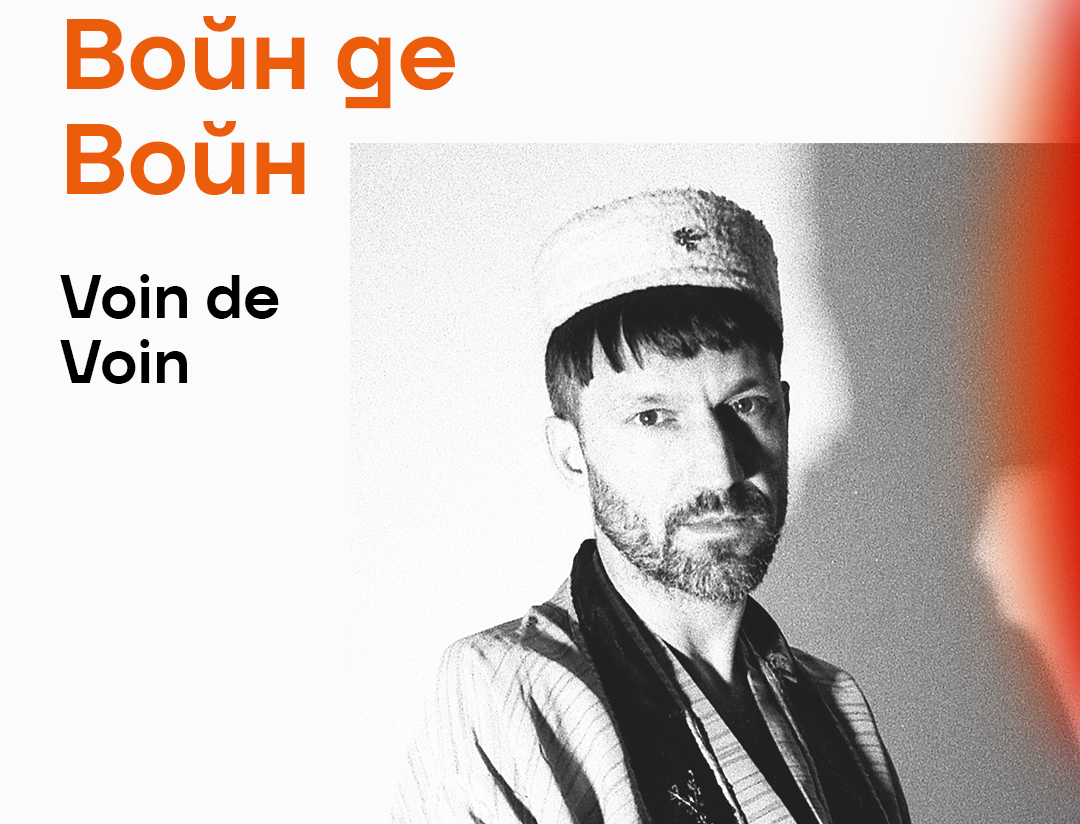
We continue our introduction of the artists in “Brieftopia: Art Between Crisis and Imagination” with the Bulgarian artist Voin de Voin.
Voin de Voin (b. 1978, lives and works in Sofia) has appearances across various fields of visual art, ranging from performance to installation. His practice incorporates research into collective rituals and behavior, gender studies, ancestral knowledge, psychogeography, sociology, and parapsychology. He approaches art as a form of activism. His work has been presented in institutional and independent spaces, art fairs, performance venues, festivals, museums, public spaces, and natural sites around the world.
His new work for the exhibition, “How Do We Organize Ourselves in Times of Chaos?”, focuses on practical exercises for cultivating the skills necessary to regain orientation and the capacity to act under conditions of instability.
The project is realised with financial support from procedure BG-RRP-11.021, New Generation of Local Cultural Policies for Large Municipalities, Investment Development of Cultural and Creative Sectors, Component Social Inclusion, National Recovery and Resilience Plan.
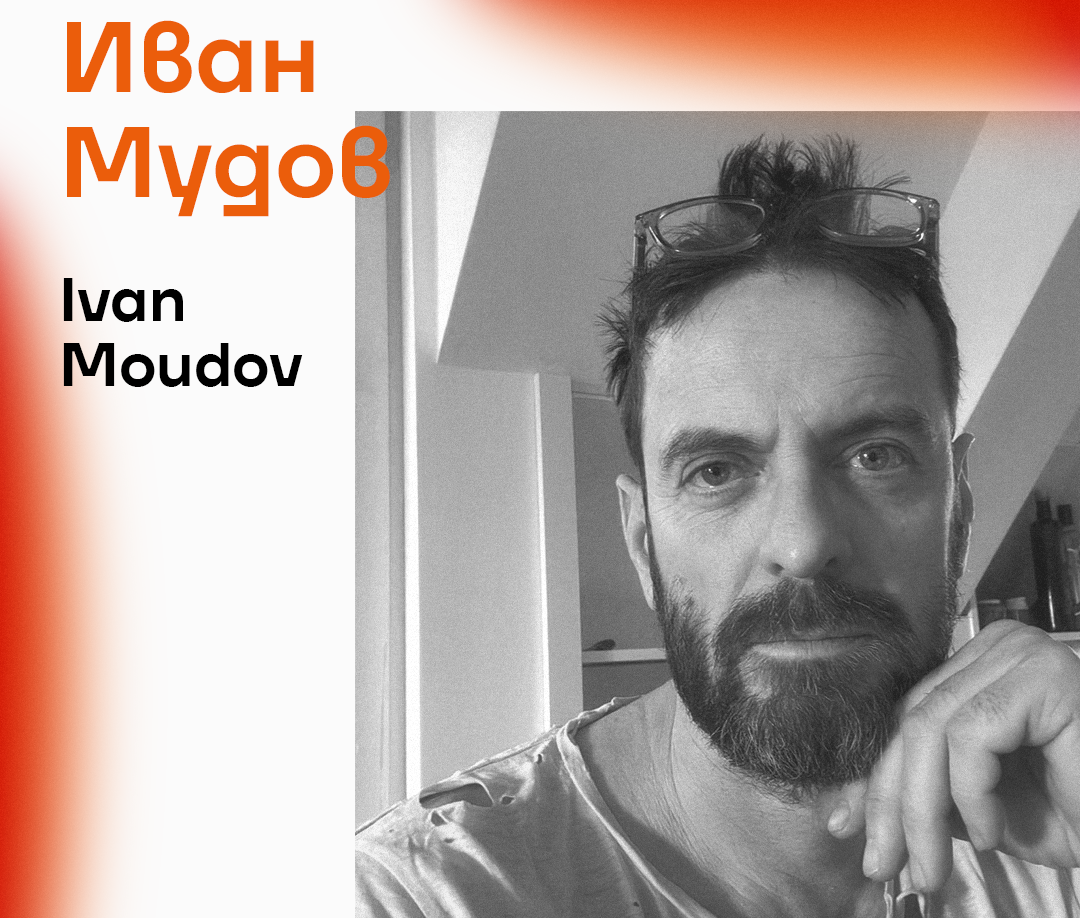
e continue our introduction of the artists in “Brieftopia: Art Between Crisis and Imagination” with the Bulgarian artist Ivan Moudov.
Moudov (b.1979, Sofia) graduated from the National Academy of Arts in Sofia in 2002.
His artistic practice spans photography, video, performance, and installation. His works, often charged with strong metaphorical meaning, question the socio-political and economic conditions under which art is produced, as well as its relationship to systems of power. By subverting established norms and rules, Moudov reveals the mechanisms through which they operate.
For the exhibition, Moudov has created two new works, one of which is a new video work, “Brieftopka”, in which, with the help of a local speech therapist, the artist attempts to read the curatorial text “in the Gabrovo dialect.” The gesture reverses the usual practice of seeking to “correct” an accent and instead proposes a deliberate engagement with the local particularities of speech—even if only for the brief duration it takes for a curatorial text to be read.
The project is realised with financial support from procedure BG-RRP-11.021, New Generation of Local Cultural Policies for Large Municipalities, Investment Development of Cultural and Creative Sectors, Component Social Inclusion, National Recovery and Resilience Plan.
We continue our introduction of the artists in “Brieftopia: Art Between Crisis and Imagination” with the Bulgarian artists Maria Nalbantova and Antoni Rayzhekov, who are producing a collaborative work for the first time.
Maria Nalbantova (b. 1990, Sofia, Bulgaria) is a visual artist working across various media, including sculpture, DIY bio-materials, video, and drawing.
She creates mixed-media installations, often in dialogue with specific locations, engaging with their historical, socio-political, and ecological dimensions.
Nalbantova is one of the artists representing the Bulgarian Pavilion at the 61st Venice Biennale in 2026.
Antoni Rayzhekov is a conceptual media artist, educator, and researcher, born in Sofia and living between Austria and Bulgaria since 2007.
He works at the intersection between sound and visual arts, computational arts, performance, and science.
Rayzhekov creates audio-visual installations, sound sculptures, interactive objects, body- and lecture-performances, where the audience is often actively involved.
For Polit-Pong, their first collaboration for the exhibition in Gabrovo, visitors are invited into a “brieftopian” experience in which a game of ping-pong triggers sounds with each strike—sometimes difficult or even impossible—composed of fragments of speech: exclamations, sighs, and inarticulate sounds of discomfort extracted from processed interviews with key figures from Bulgaria’s political and public life after 1989.
The project is realised with financial support from procedure BG-RRP-11.021, New Generation of Local Cultural Policies for Large Municipalities, Investment Development of Cultural and Creative Sectors, Component Social Inclusion, National Recovery and Resilience Plan.
We continue our introduction of the artists in “Brieftopia: Art Between Crisis and Imagination” with the Bulgarian artist Nevena Ekimova.
Nevena Ekimova is a Bulgarian artist, based in her hometown of Gabrovo.
She studied contemporary art in Norway and Iceland, and got her BFA at the Valand Art Academy in Gothenburg, Sweden.
Besides participating in exhibitions, she often works with public institutions and creates large-scale interactive projects for children and adults.
Nevena’s works are often both visual and tactile, have a poetic and/or performative element and invite active audience participation.
In the interactive installation “Noise Threshold”, made for the exhibition in Gabrovo, Nevena Ekimova creates an environment for examining the informational “climate”—a device that registers momentary states of thought and oscillations between signal and noise, between critical stance and play.
The project is realised with financial support from procedure BG-RRP-11.021, New Generation of Local Cultural Policies for Large Municipalities, Investment Development of Cultural and Creative Sectors, Component Social Inclusion, National Recovery and Resilience Plan.
We continue our introduction of “Brieftopia: Art Between Crisis and Imagination” with the Bulgarian artist Lexi Fleurs.
Lexi Fleurs is a contemporary artist working in film, painting, photography, and research-based work.
Her works are part of the collection of MAMCO Geneva and International House New York.
She holds an MFA from SVA NYC with a Fulbright scholarship and a BFA from HEAD Geneva.
Lexi Fleurs works as a freelance war documentalist and has been documenting the war in Ukraine since 2024.
In the exhibition, the new video work I Hate War and War Hates Me juxtaposes fragments of her visual communication with her friend in Ukraine.
Through them, we trace shifting emotional states—often with a comic effect—set against quiet, seemingly idyllic landscapes in which military operations are nevertheless unfolding.
The project is realised with financial support from procedure BG-RRP-11.021, New Generation of Local Cultural Policies for Large Municipalities, Investment Development of Cultural and Creative Sectors, Component Social Inclusion, National Recovery and Resilience Plan.
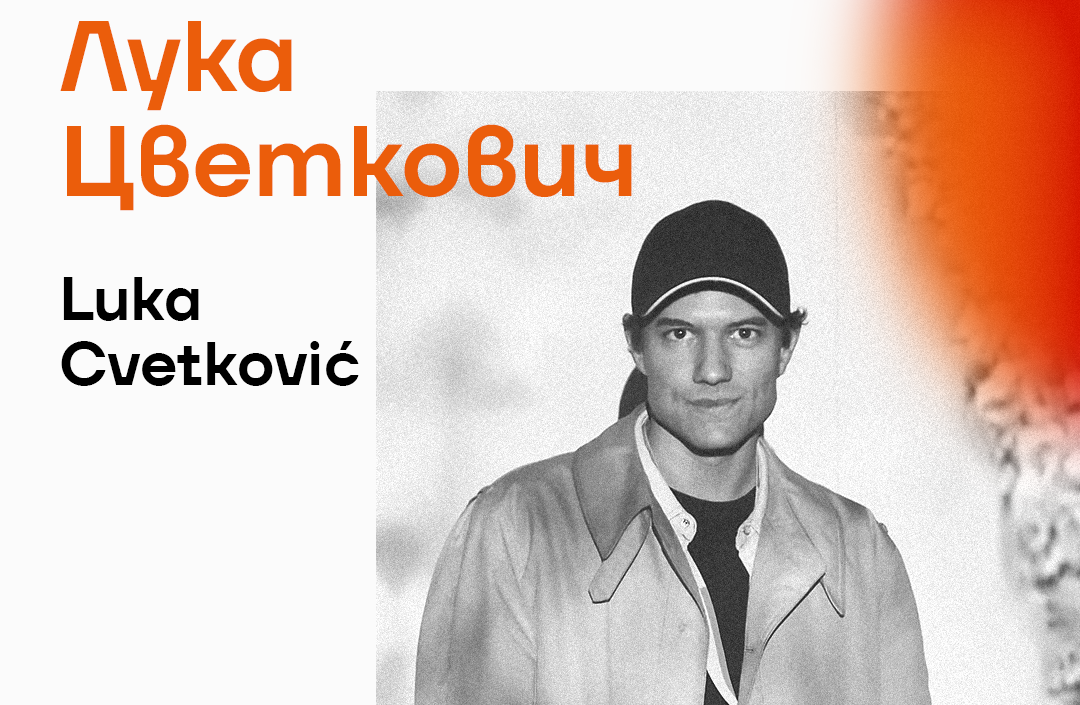
We continue our introduction of the artists in “Brieftopia: Art Between Crisis and Imagination” with the Serbian artist Luka Cvetković.
Luka Cvetković is an artist working across video, performance, text, and publishing.
His practice challenges dominant subjectivities and power dynamics within and beyond art, engaging aesthetics, philosophy, and politics.
Cvetković has exhibited across Europe, received multiple awards, and was a special lecturer at UAL (2021).
Based in Belgrade, he co-runs the Identity Crisis Network , a research project connecting artistic practices and discourses that de-stabilize fixed notions of identity and subjectivity.
In his installation “Celebrations 2029” for the exhibition in Gabrovo, Luka Cvetković, “reconstructs” the opening of the Gabrovo Biennial in 2029 and invites participants to “remember” imagined future states of the world, interwoven with personal narratives of love, family, success, and loss—raising the question of whether thinking the future is less a practice of prediction than one of memory.
The project is realised with financial support from procedure BG-RRP-11.021, New Generation of Local Cultural Policies for Large Municipalities, Investment Development of Cultural and Creative Sectors, Component Social Inclusion, National Recovery and Resilience Plan.
We continue our introduction of the artists in “Brieftopia: Art Between Crisis and Imagination” with the Bulgarian artist Boryana Petkova.
Boryana Petkova (b. 1985, Sofia) is a visual and performance artist whose intense, emotionally charged practice draws on personal experience to explore the complexity of human existence.
Deeply autobiographical and embodied, her work confronts themes such as vulnerability, memory, and resilience.
Her works have been presented at Arsenal – Museum of Contemporary Art, Sofia; Drawing Lab, Paris; the International Museum of Modest Arts in Sète; Frac Picardie, Amiens; the Drawing Biennial in Rimini; and KAI10 Arthena Foundation, Düsseldorf, among others. She has performed at AWARE, Paris; the BUNA Forum, Varna; and Residency Unlimited, New York.
Humour is a key tool and form of resistance in the exhibition, alongside imagination.
Petkova’s installation and live performance “Smile!” affirm laughter as such an instrument, in which female laughter—brief, stifled, uncontrollable—is used as acoustic material to reveal the moral and social control exerted over the body.
The project is realised with financial support from procedure BG-RRP-11.021, New Generation of Local Cultural Policies for Large Municipalities, Investment Development of Cultural and Creative Sectors, Component Social Inclusion, National Recovery and Resilience Plan.
We continue our introduction of the artists in “Brieftopia: Art Between Crisis and Imagination” with the Albanian artist Armando Lulaj.
Armando Lulaj (Tirana, 1980) is a writer of plays, texts on risk territories, filmmaker and producer of conflict images.
His research is orientated towards accentuating the border between economical power, fictional democracy, and social disparity in a global context.
His main topics of interest are the structure of power and institutional critique. In 2003 he founded the DebatikCenter of Contemporary Art, an independent art center based in Tirana.
For the exhibition, Lulaj will present part of his long-term project “The Deepest Sound” as a series of 224 photographs that provocatively invite us to view the world not as a system governed by power and economy, but as a whole without borders or nations—exactly as it appears from outer space.
As the artist notes, “art has always sought to imitate this possibility, even if only briefly and in miniature.”
The project is realised with financial support from procedure BG-RRP-11.021, New Generation of Local Cultural Policies for Large Municipalities, Investment Development of Cultural and Creative Sectors, Component Social Inclusion, National Recovery and Resilience Plan.