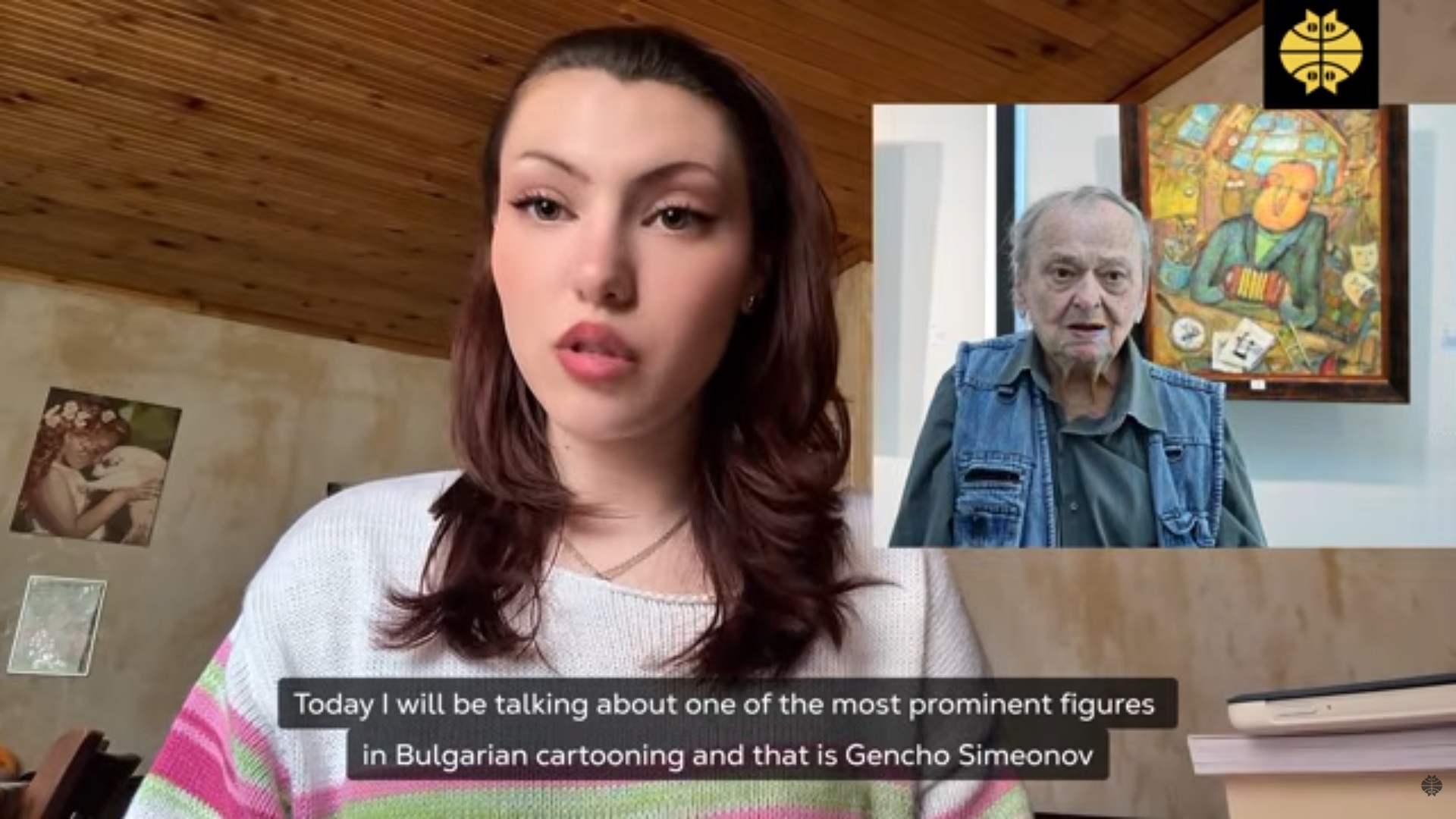
From May 22 to June 20, 2026, the Museum of Humor and Satire, as part of the HUMLIT project, hosts Maria Jodlowiec, Professor of Linguistics at the Jagiellonian University in Kraków.
After her master’s degree at the Institute of English at the Jagiellonian University and her doctoral studies at the Department of Linguistics and Phonetics at University College London, where she conducted research under the supervision of Prof. Deirdre Wilson, PhD. Maria Jodlowiec is engaged in research in the field of pragmatics. Her doctoral dissertation, entitled “The Role of Relevance in the Interpretation of Verbal Jokes”, is a pioneering attempt to apply relevance theory to the analysis of verbal humor.
She is the author of numerous articles published in scientific journals and edited collections. She has also edited and co-edited several collections.
Dr. Maria Jodlowiec is the coordinator of the Linguistics Program at the Doctoral School of Humanities at the Jagiellonian University.
The questions were prepared by Svetlana Mihaylova, Public Relations Expert at the Museum “House of Humor and Satire”.
Translation: Ivanela Lazarova, Chief Tour Guide at the Museum “House of Humor and Satire”.
1.Prof. Jodlowiec, could you briefly introduce yourself? What are the main directions of your scientific work and how did you get into the study of humor?
I have been associated with the Jagiellonian University in Kraków, Poland, since I began my studies in English Philology many years ago. My MA thesis focused on the semantics of the modal verb should in English and its Polish equivalents, so it was devoted to the analysis of the different meanings of this verb and the way of rendering them in Polish. In fact, I have always been interested in human communication, that is, how language is used to convey different meanings. One of the questions that particularly intrigued me was how it is possible to make others laugh using words alone, and this is what my PhD research focused on. I became interested in relevance theory as a model of human communication, and I used it to explore what makes verbal jokes effective. My research on jokes, understood as mini-narratives with a punchline, has led to the development of a model of punchline processing. To be more exact, I postulate the existence of an underlying cognitive mechanism, called inferential overload, that is triggered when we process a joke-punchline, which leads to laughter. All this means that one of the main directions of my research concerns humour, particularly the mental mechanisms underlying the production and reception of verbal jokes. But I have also done research in second language acquisition and language teacher education. Most recently, I have done research in translation studies.
2.You are currently in Gabrovo and at the Museum of Humor and Satire in connection with the HUMLIT project. What is the main idea of the project and what makes it significant for contemporary European society?
In today’s increasingly polarized societies, conflicts often grow stronger because people misunderstand one another and tend to act aggressively towards each other. Traditional ways of talking about difficult issues do not always work, and sometimes they even make things worse. In this context, humor can also play a double role. When used carelessly, it can reinforce stereotypes or deepen divisions, but when used thoughtfully, it has the potential to improve communication, to ease tension and support constructive dialogue. These ideas form the core of the HUMLIT project.
The HUMLIT project, supported by the Marie Skłodowska-Curie Actions program of the European Union, aims to explore this positive potential of humor. This program supports international research collaboration aimed at exploring various types of humorous discourse across different national contexts. HUMLIT focuses on developing what is called humour literacy, that is, the ability to understand and use humor effectively in communication.
The project studies humor from different perspectives: how it is created, how it appears in texts and media, and how it is understood by audiences. The overall goal is to improve dialogue and help reduce conflicts. I think this is the main significance of the project for contemporary European societies.
3.Why did Jagiellonian University decide to include humor and studies about humor in its program and you in particular?
We have had a long tradition of humour studies at the Jagiellonian University (JU), which goes back to 1990s, when I wrote my PhD entitled The Role of Relevance in the Interpretation of Verbal Jokes and Władek Chłopicki wrote his MA thesis on the script analysis of humorous short stories. The International Society of Humor Studies conference was organized in Krakow in 2012 and 2025. There have been a number of smaller humour related events organized by JU. The have been a number of grants related humour research: the three 3-year long Polish Estonian grants (2010-2012, 2026-2018 and 2023-2025), resulting in a volume on Polish and Estonian humour as well as a special issue of the Journal of Pragmatics (2019), UNA Europa seed grant 2020-2021 (resulting in humorinpublic.eu website), Art in Covid humour research group grant in 2023 (resulting in Word and image special issue ), the HUSCA and CELSA Humor and conflict grants (resulting in numerous publications and the year-long stay of Anastasiya Fiadotava from Estonian Folklore Museum in Krakow), crowned with a major HUMLIT grant (2025-2028) .
4. The project HUMLIT brings together 25 partner institutions from the EU and beyond. What are the advantages of this broad international network and what is the role of the Museum of Humor and Satire in the common research work?
Within this broader framework, the Museum of Humor and Satire in Gabrovo plays an important role. As a unique cultural institution with extensive collections and long-standing experience in presenting humor to the public, the Museum provides a vital link between academic research and real-world practice.
The Museum’s extensive collection of international materials on humor, which I have already had the opportunity to browse through, clearly demonstrates its unique role as a repository of globally diverse humorous materials. The richness and variety of this collection provide valuable insight into how humor functions across different cultural and historical contexts. At the same time, the way these materials are curated and presented confirms the Museum’s active role in making them accessible to a wider public. This makes the Museum an ideal, indeed a par excellence setting for the HUMLIT project, as it connects research with how humor is experienced and used in the real-world context.
The direct contact with the Museum’s staff, who serve as invaluable informants on Bulgarian humor, is equally important. Their insights have provided essential cultural context, helping to interpret local humor practices, references, and sensitivities that are not immediately accessible through written sources alone. This interaction significantly enriches the project by grounding theoretical analysis in lived experience and contemporary cultural knowledge. I would like to emphasize that people working at the Museum constitute a crucial Bulgarian component of the HUMLIT project. Thank you for that!
5. One of the goals of the project is to explore so-called “humor literacy”. How would you explain this concept to people who are encountering it for the first time? Why is it important to be able not only to laugh, but also to understand how humor works?
Humor literacy can be understood as the ability to understand and use humor in a thoughtful, informed, and responsible way. It involves recognizing when something is intended to be humorous and understanding how it works: whether through wordplay, irony, exaggeration, or cultural reference, so it goes beyond simple comprehension. It also includes being able to interpret humor within its specific social and cultural context, since what is perceived as funny can vary greatly across different groups, situations, and communicative settings. At the same time, humor literacy entails a critical awareness of the effects that humor may have: it allows us to reflect on whether humor as used in a certain way brings people together or, on the contrary, reinforces stereotypes or creates exclusion. Finally, it involves the ability to use humor appropriately and effectively in communication, adapting it to one’s audience and context in a way that supports understanding rather than conflict. In this sense, humor literacy is not just about appreciating jokes and other forms of humor, but about understanding humor as a powerful communicative tool that shapes social interaction and can either divide or connect people. This, I think, explains why it is important not only to laugh at things that are intended to be funny but also to understand how humor works.
6. As part of the project, you analyze interviews with Bulgarian humorists, cartoonists, writers and actors. What impressed you most about Bulgarian humor? Are there any specific features that distinguish it from other European traditions?
Humor, especially in our part of the world, tends to be strongly connected to social and political reality and this appears very true of Bulgarian humor. So it functions not merely as entertainment, but as a means of commentary and critique, often addressing difficult topics, such as corruption, social inequality, national vices, international tensions, etc. Even when expressed through simple or exaggerated images, it tends to carry a clear reflective intent and invites the audience to reinterpret everyday realities in a critical way.
There is an important feature that, if I may hypothesize, is shared across the ex-communist block countries: in the communist era, humor served an important compensatory and oppositional function, operating under conditions of censorship and restricted freedom of expression. Because direct criticism of political authorities was often risky or impossible, humor became an indirect means of articulating dissent, exposing contradictions in official discourse, and maintaining a sense of intellectual and moral autonomy, hence – I think – the frequent use of sharp metaphor in Bulgarian humor.
It is worth pointing out that in communist times irony, allegory, and coded references were not merely stylistic choices but practical strategies that allowed artists and audiences to communicate meaning “between the lines.” As a result, humor developed a distinctive density and subtlety, relying on shared background knowledge and interpretative competence. This tradition has had a lasting influence: many forms of Bulgarian humor continue to display a preference for indirect critique, symbolic condensation, and layered meanings.
Another notable aspect is the presence of self-irony and critical distance toward Bulgarian society itself. Bulgarian humor frequently turns inward, highlighting everyday behaviors, social norms, moral shortcomings, and referring to current political developments. This suggests a tradition in which humor is not only oppositional but also introspective, with a strong satirical edge, encouraging reflection rather than offering simple relief or escapism. Gabrovo humor, widely recognized for its distinctiveness and richness, serves as a particularly striking example of the strongly self-critical nature of Bulgarian humor, as it openly mocks local stereotypes and social behaviors. Its prominence highlights a broader tendency toward introspection and self-irony, making it an especially vivid illustration of humor directed inward rather than solely at external targets.
One striking feature in the political cartoons which I have analyzed here is the continued use of the hammer-and-sickle symbol to represent communism or Soviet influence, in a direct and visually prominent way. This kind of symbolism appears to function as an immediately recognizable shorthand for historical and ideological domination, especially in the context of international affairs. In contrast, contemporary Polish cartoons tend to use this kind of Soviet-era imagery less frequently, reflecting a different approach to representing the communist past and its legacy.
Having said all that, I would like to make it very explicit that my understanding of Bulgarian humor remains limited and is still rather superficial at this stage.
7. To what extent is Bulgarian humor understandable outside the national context? According to your observations, does it rather reveal cultural differences or find a common language with other European societies?
Bulgarian humor appears to be both widely accessible and culturally specific. Its core mechanisms, such as incongruity, irony, and visual metaphor, and certain recurring topics (like infidelity, economic hardships, corrupt politics, etc.) are largely universal, which makes many cartoons and jokes understandable beyond the national context, especially in today’s “global village,” where societies increasingly share similar dilemmas and concerns.
At the same time, it reflects distinct historical and cultural experiences, particularly in its references to communism, transition, and local stereotypes, which may require contextual knowledge for full appreciation. For instance, the egg with a tap, which ridicules the thriftiness of Gabrovo housewives, is very culture-specific and may not be fully meaningful (and hence not funny) to those unfamiliar with its cultural significance.
Overall, Bulgarian humor successfully combines a shared European “language” of humor with locally embedded meanings, making it both understandable across cultures and uniquely characteristic, I think.
8. The project considers humor as a tool for rethinking conflicts and sensitive social issues. Is it possible for humor to actually reduce tension and promote dialogue where traditional forms of communication prove ineffective?
Yes, it is not only possible, but there is growing evidence, both from research and from real communicative practice, that humor can indeed reduce tension and open space for dialogue, especially in situations where traditional forms of communication fail.
Firstly, humor has a unique capacity to lower psychological barriers. In many conflicts, participants become entrenched in their positions and communication breaks down because the interaction is perceived as threatening. Humor can change this. By introducing an element of playfulness or incongruity, it can suspend defensiveness and allow people to step back from rigid attitudes. In this sense, humor does not solve the conflict directly, but it creates conditions under which constructive dialogue becomes possible.
Secondly, humor can function as a shared space, even between people who disagree. When individuals laugh together, especially at something that highlights a common human experience, they implicitly acknowledge a degree of mutual understanding. This shared moment can help to see the other party in a more favorable light, which is often crucial in polarized contexts, where opponents are seen in simplified or stereotypical terms. In this way, humor can help shift interaction from confrontation to friendly co-participation.
Another important aspect is that humor allows for the indirect expression of sensitive issues. Some topics are difficult to address directly because they provoke strong emotional reactions or are social taboos. Humor can make it possible to introduce these topics in a less threatening way. Irony, parody, or satire, for example, can expose contradictions, criticize behavior, or highlight injustice without resorting to direct accusation. This indirectness is often what enables humor to reach audiences that would otherwise not be open to messages of a certain type.
What I consider particularly important is that humor can also alleviate conflict. Instead of presenting opposing positions as irreconcilable, humor can highlight their absurdities, exaggerate them, or place them in a new perspective. This can reduce the perceived gravity of the disagreement and encourage more flexible thinking. In some cases, it may even reveal that the conflict is based on misunderstandings or exaggerated differences.
However, it is crucial to emphasize that humor is not inherently positive. Its effect depends entirely on how it is used and interpreted. Poorly applied humor, especially when it targets particularly vulnerable groups or reinforces stereotypes, can deepen divisions and escalate conflict rather than reduce it. For this reason, the concept of humor literacy is essential. It provides the tools to understand when humor is appropriate, how it will be received, and what effects it may produce.
This is precisely where projects like HUMLIT become particularly relevant. By looking at how humor is created, what it consists of, and how it is received, the project aims to identify the conditions under which humor can support constructive communication. It seeks to move beyond the question of whether humor can help, asking when, how, and for whom it can be effective.
To sum up, humor can indeed reduce tension and promote dialogue, especially in situations where communication fails. It does so not by replacing serious discussion, but by complementing it, by opening positive emotional space, by enabling indirect expression, and by creating moments of shared understanding. When used thoughtfully and responsibly, humor can become a powerful tool for rethinking conflict and dealing with sensitive social issues in a more productive way.
Second part of the Interview >>