Category: Current Exhibitions

VIRTUAL WALK IN EXHIBITION “BORIS DIMOVSKI – 100 YEARS BIRTH ANNIVERSARY”VIRTUAL WALK IN EXHIBITION “BORIS DIMOVSKI – 100 YEARS BIRTH ANNIVERSARY”

For those who missed the opportunity to view the exhibition “Boris Dimovski – 100 Years Birth Anniversary” on site, it can now be viewed in the virtual tour, which provides freedom of movement and interaction with the exhibition, through interactive markers added to the works in it.

The large-scale retrospective exhibition is curated by Krasimir Iliev and includes works from the funds of the Museum of Humor and Satire, the National Gallery, the Art Gallery – Ruse, the collections of Prof. Ivan Elenkov, Vladimir Iliev, Lyudmil Veselinov and Petar Tishkin, as well as works from the Archives Public Library.

The exhibition was available for viewing on site until June 17, 2026, when the monograph accompanying the exhibition was also presented.


The exhibition is dedicated to the 165th anniversary of the declaration of Gabrovo as a city.

It is carried out with the media support of the Bulgarian National Radio and the Bulgarian Telegraph Agency.


100TH ANNIVERSARY OF THE BIRTH OF STEFAN FARTUNOV100TH ANNIVERSARY OF THE BIRTH OF STEFAN FARTUNOV

Exhibition in the Park of Humor
Opening: 29 April 2026, 5:00 PM


The Museum of Humor and Satire celebrates the 100th anniversary of the birth of its founder, Stefan Fartunov, with an outdoor documentary exhibition located in the Park of Humor.

Under the motto “Laughter Cannot Be Homeless”, the exhibition follows the life and work of the individual who transformed Gabrovo’s humorous tradition into an institution of global importance.

Born on 29 April 1926, Stefan Fartunov was a lawyer by education and a visionary by vocation. He graduated in law from Sofia University and worked as
legal advisor at the Municipal People’s Council in Gabrovo. At the same time, he was actively engaged in cultural activities as Deputy Chairman of the
Aprilov–Palauzov Community Centre and Secretary of the Club of Cultural Workers.

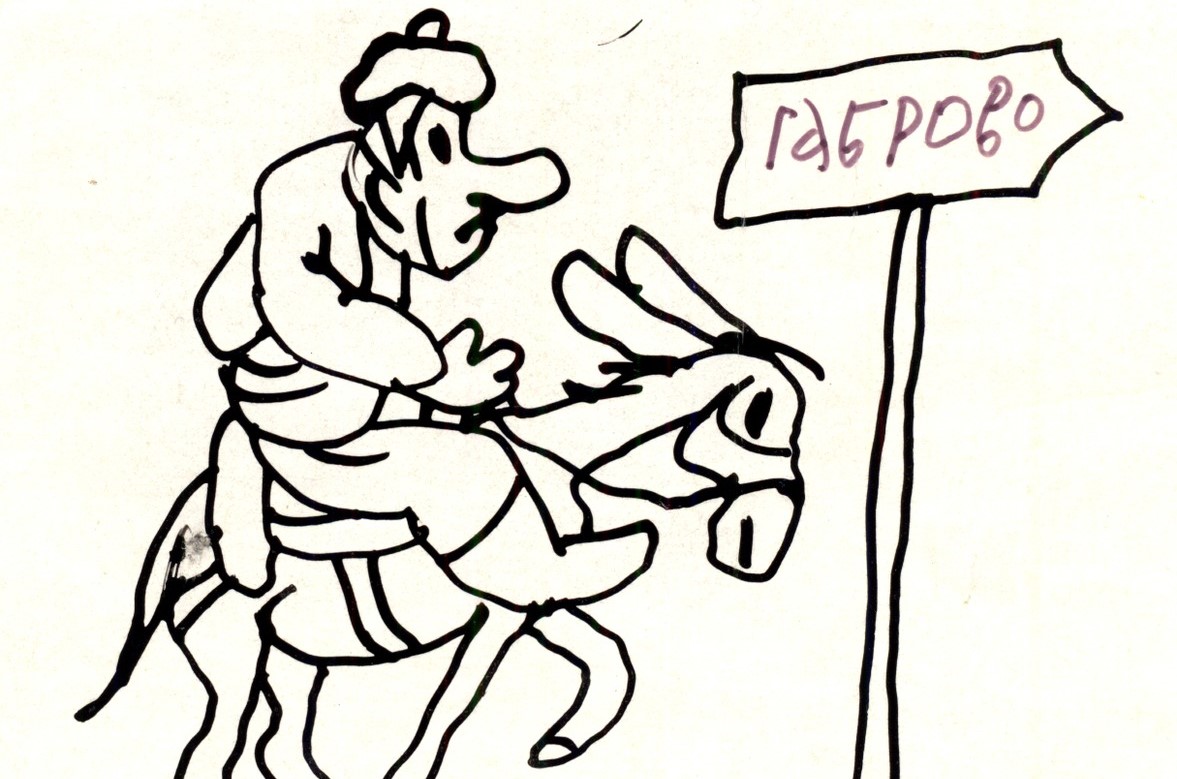
A key moment in his work was the publication in 1966 of the Gabrovo Jokes book, compiled by him, with illustrations by Boris Dimovski and edited by Radoy Ralin. In the years that followed, the book became an international symbol of Gabrovo humour, with over 2,400,000 copies published and translations into more than 20 languages.

Inspired by this tradition, Fartunov went on to create and establish a cultural institution unique in character—the House of Humor and Satire. Together with like-minded people—Mihail Mihov and Veselin Vassilev—he developed the conceptual model for the future institution in the period 1968–1972.
A circle of bright personalities formed around him, including Radoy Ralin-the author of the motto “The world lasts because it laughs.” Boris Dimovski-an artist and cartoonist whose illustrations, murals, and souvenirs became the visual identity of the House; Todor Tsonev—author of key concepts for its name and spatial design—and Bogdan Benev, creator of its emblematic logo. Crucial support was provided by architect Karl Kandulkov, then Mayor of
Gabrovo and also the author of the architectural design, under which an industrial building began its transformation into the House of Humor and Satire in 1972.

The First Biennial of Humor and Satire was held in 1973, and on 17 May 1975 the building was officially opened. In a gesture true to the institution’s spirit, the facade was temporarily “wrapped” and decorated by Boris Dimovski with illustrations from Gabrovo Jokes.

Over the following decades, the House established itself as an international centre for humour and satire. In 1980, during the 21st session of UNESCO’s
General Conference in Belgrade, the institution was officially admitted to the UNESCO network as an international information centre for humour and
satire—a unique status of its kind in the world.

Stefan Fartunov was awarded the title “Distinguished Cultural Figure” and the Order of Saints Cyril and Methodius, First degree. In 2003, he was awarded the title of “Honorary Citizen of Gabrovo” for his outstanding contribution to the city’s cultural life.

Since 2015, a representative hall in the Museum of Humor and Satire has been named after him.

Stefan Furtunov died on June 25, 2010 in Gabrovo, leaving behind an institution that lives and laughs even today.

The exhibition presents archival documents, photographs, and testimonies related to the creation and development of the House of Humor and Satire—a story of vision, consistency, and the power of a cultural idea.

“True humor knows no borders—it crosses them and becomes the heritage of all people around the world.” (Stefan Fartunov)


The exhibition is realised in partnership with the State Archives – Gabrovo.
Special thanks for their support to the Municipality of Gabrovo and the Municipal Enterprise “Urban Development”

PUSTA VE4NOST / BLANK ETERNITYPUSTA VE4NOST / BLANK ETERNITY

The Museum of Humor and Satire presents:
PUSTA VE4NOST / BLANK ETERNITY
Exhibition by Filip Boyadzhiev

April 1 – June 30, 2026
Floor 2, Giraffe Hall


The exhibition BLANK ETERNITY by visual artist Filip Boyadjiev explores the mechanisms through which contemporary social images transform into cultural mythologies. The project continues the line of theconTEMPORARY HEROES series, in which the author works with the figure of the so-called “traditional bulgarian man” – a character that is both familiar and hyperbolized, constructed from various layers of post-socialist culture. This figure emerges as a kind of hero of our time – a self-proclaimed patriot who builds his own symbolic universe from signs of status, power, and belonging.

The central element is a spatial installation composed of thousands of empty metal cans, forming a monumental environment reminiscent of a sanctuary. This space can be interpreted as a temple, built by the hero himself as an attempt to leave a trace and secure his presence in eternity.

The forced encounter between two cultural models – Bulgarian pseudo-patriotism and ancient Egyptian tradition – creates a distinctive clash. The archetype of eternity is refracted through the local context and turns into a grotesque form, where the desire for grandeur mixes with an element of absurdity. The temple that the hero constructs is both monument and stage set – a space in which the aspiration for immortality is marked by its own irony.

In the exhibition, the hero dissolves into a system of objects and symbols. Fragments of everyday life function as cultural markers that shape a visual vocabulary of a hybrid identity attempting to stand simultaneously in the past, present, and future. The black color covering the objects in the installation functions as a final gesture of intervention by the artist. The shine of the symbols is absorbed and neutralized; the objects become silhouettes devoid of individuality. Thus, the desire to shine turns into a gesture of self-extinguishing, the pursuit of greatness transforms into an image of one’s own emptiness, and the hero’s ego gradually becomes grotesque.


After its highly successful presentation in Sofia, the exhibition moves to Gabrovo – a city that, in the Bulgarian cultural context, is closely associated with traditions of humor, self-irony, and social critique. Presenting the project at the Museum of Humor and Satire creates a new context of the work, which is not simply a re-presentation of the exhibition but its conceptual continuation. The encounter between the project and the specific cultural environment of Gabrovo highlights the role of humor as a tool for critical thinking – the ability of society to recognize its own mythologies and question them.

The metal cans were provided with the kind assistance of Elena Tsvyatkova.

This project is realised with the financial support of the Ministry of Culture.

JUST CATSJUST CATS

Photo Exhibition by Veselin Borisev
April 1 – June 30, 2026
Floor 4, Hall 8

The author of Just Cats doesn’t describe himself as a cat lover. Yet, despite his preference for dogs, cats have always been part of his life. Today, he and his family share their home with two dogs and one cat.

Urban or rural, domestic or free‑roaming, black, white, or multicolored, lazy or restless, aloof or affectionate—no cat appears alone in the photographs of this exhibition. In every portrait, one senses the eye behind the lens: Veselin Borishev watching, observing, connecting. It feels like love.

The photographs in Just Cats belong to a larger, still-unshown project titled Pets and Other Species.

About the author

Veselin Borishev, a Bulgarian photographer born in 1967 and a graduate of Sofia’s National High School of Fine Arts, is renowned for his compelling fine art and photojournalistic work.

His artistry transitions between traditional film and digital photography, utilizing both black-and-white and color to explore varied, always conceptual themes. Rejecting stylistic boundaries, he engages in constant experimentation. His images convey a raw honesty, often brutally sincere.

“Structures in Transition” – Curatorial School 2.0 Exhibition“Structures in Transition” – Curatorial School 2.0 Exhibition

Opening: 24.03.2026 at 1:30 p.m., Fourth floor, Museum of Humor and Satire

The exhibition “Structures in Transition” (24 March – 25 July 2026) is the culmination of the two‑month Curatorial School – an educational and practical program aimed at developing curatorial skills, critical thinking, and professional preparation in the field of visual arts.  

Within the context of the Bulgarian art scene, curatorial work often remains ambiguous. The initiative of the Christo and Jeanne‑Claude Center in Gabrovo seeks to create a sustainable framework for learning, collective practice, and public presentation. The school gives its 18 participants an opportunity for interdisciplinary collaboration – an approach inspired by the combination of different kinds of knowledge and experience characteristic of Christo and Jeanne‑Claude’s projects.  

Hosted by the Museum of Humor and Satire in Gabrovo, “Structures in Transition” is organized in three thematic sections, curated by three working groups mentored by Margarita Dorovska, Svetlana Kuyumjieva, and Vesela Nozharova. The participants also had the opportunity to consult with the lecturers Vasil Vidinski and Stanimir Stoyanov.

The exhibition includes works from the museum’s archive, brought into dialogue with the perspectives of young painters, contemporary artists, illustrators, and even photojournalists. The project explores the tension between the individual and society, revealing the many invisible ties and rules that connect them.  

Its three sub‑themes are “The Queue,” “The Game,” and “Taming the Monument.”

“The Queue” examines a familiar social phenomenon that speaks volumes about different historical periods – their shortages, needs, and aspirations. A line of people waiting for something is a democratic and self‑regulating structure, yet it can easily become a monument to passivity or a vicious circle. Group “The Queue”: Ivana Borisova, Maria Borisheva, Yoshka Mihaylova, Iva Rudnikova, Krastina Stefanova, Emilia Stoeva 

Taking as its starting point the local case of Chardafon in Gabrovo – a monument whose head was replaced by those in power more than once – “Taming the Monument” investigates the “beheading” of monuments both literally and metaphorically: as the end of an ideological narrative and as a process revealing public memory as a field of continual rewriting. Every monument has an ideological lifespan. Group “Taming the Monument”: Hristina Decheva, Martina Grueva, Ivelina Ivanova, Kalina Ivanova, Teodora Marinova, Marina Kisyova de Heus

“The Game” segment, inspired by Johan Huizinga’s concept of Homo Ludens (“the playing man”), looks at play not only as entertainment or an escape from reality but also as a fundamental principle through which a society understands, constructs, and resists the world. The works presented analyze the mechanisms of (dis)empowerment that shape our reality, leaving room for experimentation and a reconsideration of the rules by which we live. Group “The Game”: Paola Dimova, Aleksi Ivanov, Natalia Krisenko, Ekaterina Leondieva, Ralitsa Petkova, Ana Radkova, Elena Tsvyatkova 

“Structures in Transition” runs until 25 July 2026 at the Museum of Humor and Satire in Gabrovo.  

Participating artists: Zhenya Adamova, Velko Angelov, Zhivko Angelov, Ivo Bistrichki, Tsvetomira Borisova, Veselin Borishev, Lachezar Boyadjiev, Panayot Barnev, Anna Vasof, Alexander Valchev, Ivan Grigorov, Damyan Damyanov, Petra Dimitrova, Angelariy Dimitrov, Evgeni Dimitrov, Stefan Ikoga, Hristo Komarnitski, Veselin Kostadinov, Ivan Landzhev, Roxana Markova, Yoshka Mihaylova, Ivan Moudov, Stefan Nikolaev, Alina Papazova, Adrian Paci, Nia Pushkarova, Kamen Stoyanov, Isao Hashimoto, Veronika Tsekova, Valko Chobanov, Venelin Shurelov, Geri Georgieva


Curatorial School 2.0 is a project by the Christo and Jeanne‑Claude Center and Plakat Combinat Ltd., funded under procedure BG‑RRP‑11.021, Grant Scheme “New Generation of Local Cultural Policies for Major Municipalities,” Investment “Development of Cultural and Creative Sectors,” Component “Social Inclusion,” National Recovery and Resilience Plan.


Garden Town grows with the childrenGarden Town grows with the children

Seven years is a serious age for a town. Especially when this city is called Garden Town and grows together with the children.

After a short renovation, the beloved space opens its doors again. We are waiting for you with richer content, a variety of activities and more space for play, discovery and children’s imagination. This is not another renovation, but a new chapter.

See more in the video with the author of the exhibition – Nevena Ekimova.

And the best thing? This is just the beginning – until the end of spring Garden Town will continue to surprise.

Satire and PropagandaSatire and Propaganda

Permanent Exhibition

On 16 May, the Museum of Humor and Satire presents the exhibition Satire and Propaganda in the cartoons from the Gabrovo Biennial 1973 – 1989. The exhibition traces the period of creation of the Museum’s collection in the context of the new rules in (and uses of) satire during the establishment of the communist regime in our country. Particular attention is paid to how the emergence of the House of Humor and Satire changed and developed the field of cartoons and satire in the country.

Hall 6, Museum of Humor and Satire
Откриване: 16 май, 17:00

The exhibition presents a study of the cartoons that participated in the International Biennial of Humor and Satire, organized by the House of Humor and Satire from its creation in 1973 until the end of the totalitarian period in 1989. Its aim is to assess the possibility of satire in a society in which the freedom of expression is limited, and the possibility of criticism is locked in the norm of “small justice” – individual phenomena and mistakes of the bureaucracy can be condemned to a certain, low level of power, without specifically naming and indicating party leaders, often using the so-called called “Aesopian language”. The organizers of the Biennial are extremely honest, choosing to name the Grand Prize the “Golden Aesop”. The other use of satire in cartoons, where it was directed outwards at international politics and the ideological enemy, was on the contrary quite specific, with clear depictions of political figures such as Margaret Thatcher, Richard Nixon, Ronald Reagan, Henry Kissinger. Truthful or not, in a heavily muted and controlled information environment, these cartoons became a propaganda tool – a practice already well worked out on the pages of the newspapers Papagal (Parrot) and Starshel (Hornet) since the establishment of the new government.

In order to illustrate the spirit of the times and the limits of freedom, three events outside the Biennial are also presented in the exhibition:

  • the “Hot Peppers” case with the book of epigrams, selected and titled by Radoy Ralin and illustrated by Boris Dimovski;
  • the arrest of Todor Tsonev because of caricatures of Todor Zhivkov and other party leaders found in his studio;
  • the cartoon “Haidushko Horo” by Georgi Chaushov, published on the pages of the Starshel newspaper in November 1989.

Several key themes stand out in the considered volume of biennial cartoons: wars and conflicts, economic crises, criticism of Western society, apartheid, religion, ecology, on the one hand globally and on the other, domestically – the life of the little man, the bureaucracy , the search for meaning, domestic adversity, power dynamics in the home.

Visitors have the opportunity to engage in the exhibition through an interactive application with two modules – self-irony and re-cartoon. In the first, the viewers can put their own image in the selected cartoon, and in the second they can remix attributes from different cartoons, creating their own one.

The exhibition “Satire and Propaganda” can be viewed through a virtual tour which provides freedom of movement and interaction with the exhibition, through the addition of interactive markers to the works within.

The “Address of Satire” project – creation of an exhibition from the fund of the “House of Humor and Satire” Museum – Gabrovo and an accompanying program on the role and limits of satire and its exhibition in renovated spaces in the Museum”.

The project is implemented under the Program “Cultural Entrepreneurship, Heritage and Cooperation”, financed by the FM of the EEA 2014-2021.
Contract No. BGCULTURE-1.001-0039

www.eeagrants.bg

How Gabrovo became the Capital of HumorHow Gabrovo became the Capital of Humor

Изложба с надпис "Как Габрово стана столица на хумора" и публика, разглеждаща експонатите.
Permanent Exhibition

The well-known Gabrovo jokes with illustrations by Boris Dimovski have been complemented by colorful characters associated with the history of Gabrovo humor and the Museum, drawn by the Gabrovo-born cartoonist Hristo Komarnitski.

The exhibition introduces visitors to the spirit of old Gabrovo, takes them through the socialist era and the period after 1989, aiming to help understand the history and cultural role of the Museum of Humor and Satire. It is crucial in presenting the identity of Gabrovo as the capital of humor.

The exhibition was realized with the financial support of the Ministry of Culture, PRECIZ-SK, AMK Ltd. Gabrovo, Nikolina Hinkova, Plam Plast Ltd., Tartey Consult Ltd.

Partners: State Archive – Gabrovo, Aprilov-Palauzov Regional Library, Regional Historical Museum – Gabrovo.

The Mirror HallThe Mirror Hall

Огледална зала, автор Невена Екимова, Музей на хумора и сатирата / фотограф: Росина Пенчева
Permanent Exposition

This is an implementation of a legendary hall that many visitors are convinced exists in the Museum, and some even claim to have visited it in their youth. However, the truth is that the Mirror Hall at the Museum of Humor and Satire has never existed until now.

Known as the Capital of Humor, Gabrovo is a city where locals take pride in their ability to self-ironize and entertain others with their frugality. Tourists choose it as a destination, expecting to find a place that is fun, witty, and entrepreneurial. The Gabrovo mirrors in the new hall precisely meet this demand – they are warped, funny, and attractive. They reflect the spirit of Gabrovo humor by transforming a person without significant expenses.

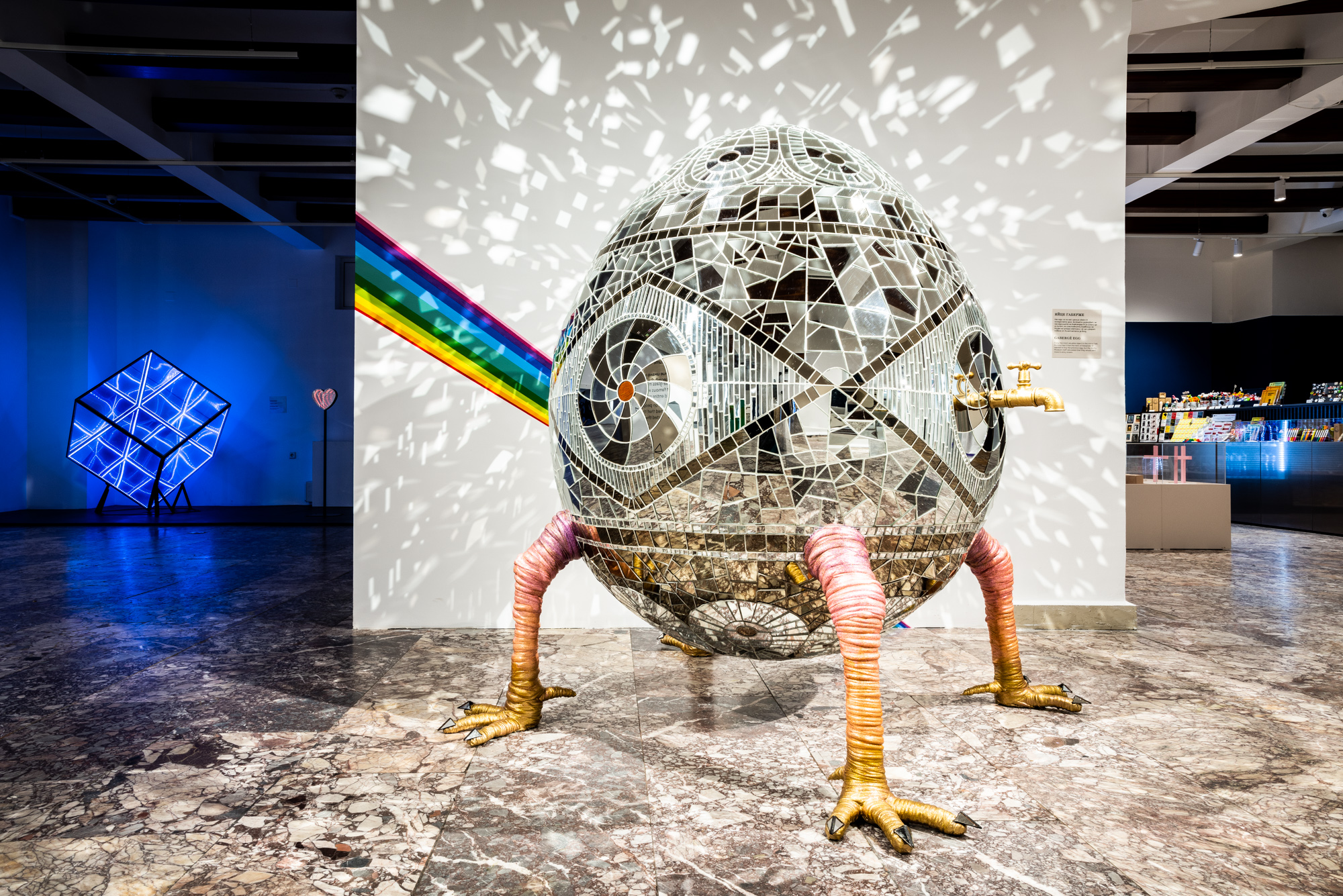
The new hall features a series of art installations designed by the young Gabrovo artist Nevena Ekimova, a participant in two editions of the Gabrovo Biennial and the author of the children’s favorite hall “City Garden,” which opened at the Museum in April 2019. Two of the attractions – the famous Gaberzhe egg with a crane and the Kaleidoscope for Two – are the work of another participant in the latest Gabrovo Biennial, the artist Plamen Kondov from Veliko Tarnovo.

Guests will see themselves in a new light in the Gabrovo selfie booths, beautify themselves almost for free with Gabrovo plastic surgery, and get lost and found in the smallest but very confusing Gabrovo mirror maze. The most valuable object in the hall is the dazzling Gaberzhe egg with a crane (a whole egg is too much for one meal!). Another legend tells that the heirs of Alexander III wanted to buy it, but the thrift managers of the Museum of Humor decided that they would make more from entrance tickets if they kept it.

Mirror Hall
Author: Nevena Ekimova, Museum of Humor and Satire
Photographer: Rosina Pencheva

Изложбено пространство с интерактивна инсталация, отражаваща цветни светлини и огледала, заглавие 'Лабиринт' на стената.
Mirror Hall * Author: Nevena Ekimova, Museum of Humor and Satire / Photographer: Rosina Pencheva

The new Mirror Hall was implemented with the support of:
“Culture” Program of the Municipality of Gabrovo
Public Donor Fund Gabrovo
America for Bulgaria Foundation
Express Gabrovo Auto Service
Noble Graphics Ltd.
FourPlus Studio
Crane Project Ltd.
Inter Power Ltd.
MDMT Ltd.
Library Cafe
BrimBim Studio
Stanko Atanasov
Ivan Kolev