Author: digital humor house

For a year now, books from the museum’s collection have been available to everyone in the renovated libraryFor a year now, books from the museum’s collection have been available to everyone in the renovated library

The month of May is rich in occasions for celebration – both for the city of Gabrovo and for the whole of Bulgaria. It is a time of celebrations, traditions and national pride.

Among all the significant dates, the most inspiring is the day when we pay tribute to the Bulgarian alphabet, education and culture – May 24. This is a holiday of spirit, knowledge and literature, which reminds us of the power of the word and the unquenchable pursuit of education and enlightenment.

In the spirit of this festive month, we at the Museum of Humor have another special occasion for joy – on May 16, 2025, we celebrated the first year of the renovation of our Library (of course, not since the book was invented!). Instead of a cake, we chose to celebrate with spiritual food – in the form of an entertaining game.

In three student groups, inspired, young minds embarked on a mental adventure in which they had to connect literature with fine art. Or in other words – aphorisms met cartoons. And, as often happens in such meetings, it was not without smiles, jokes and a philosophical insight or two.

We called the activity “Wisdom of a Smile” because in it words and images embraced creatively. The children chose aphorisms that captured centuries-old wisdom (and sometimes light sarcasm) and looked for a suitable cartoon from our international catalogs to illustrate the message. If you think this is easy – try expressing “Life is short, but boredom prolongs it” with a cartoon and you will understand!

The result? Combinations that made even the most serious eyebrows raise a smile. And most importantly – we created a space for shared inspiration and creative dialogue.

The game remains open! Any visitor who wants to test whether their imagination works in rhymes, metaphors or caricatures is welcome at the Library. Grab a smile, put a little curiosity in your pocket and let your imagination guide you on the path to humor in everyday life.

We are waiting for you – with books, cartoons and, of course, a smile!

VIRTUAL WALK THROUGH STOYAN VENEV’S EXHIBITIONVIRTUAL WALK THROUGH STOYAN VENEV’S EXHIBITION

The exhibition “Stoyan Venev. Canonical, tongue-in-cheek, and out of the drawer” can be viewed in the virtual walk, which gives freedom of movement and interaction with the exhibition, through interactive markers added to the works in it.

The exhibition is available for viewing on site until June 30, 2025 and is realized with the financial support of the Ministry of Culture and is a joint project between the Museum “House of Humor and Satire” – Gabrovo, Art Gallery “Vladimir Dimitrov – The Master” – Kyustendil and partnering collectors.

The artist Daniel Bozhkov gained the prestigious Guggenheim Fellowship for 2025The artist Daniel Bozhkov gained the prestigious Guggenheim Fellowship for 2025

We are happy and proud to share that Daniel Bozhkov, one of the participants in the 25th Gabrovo Biennial of Humor and Satire in Art (2022), was awarded the prestigious Guggenheim Fellowship for 2025 in the Fine Arts category.

This recognition emphasizes the importance of contemporary artistic practices that explore the boundaries between humor, social engagement and artistic experiment.

As part of the exhibition “Sensitivity Training”, curated by Olav Westphalen, Bozhkov presented the project “SPACE CUCUMBER CAROUSEL” – a play between science fiction, agro-utopias and the absurd logic of the modern world. The interactive installation aroused keen interest and inspired many people.

Learn more about the project:
https://biennial.humorhouse.bg/en/news/SPACE-CUCUMBER-CAROUSEL-105

And about the exhibition “Sensitivity Training”:
https://biennial.humorhouse.bg/en/exhibitions/Sensitivity-Training-Exhibition-curated-by-Olav-Westphalen-12

Congratulations to Daniel and the entire Biennial team!

We continue to believe that humor and satire can be a means of sensitivity, critical thinking, and global dialogue.


The Guggenheim Fellowship is one of the most prestigious awards for artists, scholars, and thinkers in the United States and Canada.

This is an exceptional recognition for Daniel Bozhkov!

More about this year’s awards: https://www.gf.org/stories/announcing-the-2025-guggenheim-fellows#2025-fellows

More about Daniel Bozhkov on his personal website: https://www.danielbozhkovart.com/


The announcement of the award, printed in the Sunday edition of the New York Times,

April 20, with the names of the award recipients.

This year they celebrate their 100th anniversary and among the previous winners

is John Updike – Daniel Bozhkov’s favorite author.

A valuable donation enriched the museum libraryA valuable donation enriched the museum library

A large part of the collection of the Museum of Humor and Satire, both works of art and books, has been collected from donations by artists, admirers and followers. This is also the reason for the great variety of printed works that you can find in our library – from a variety of fiction, most satirical and humorous works, through periodicals, to stories in pictures.

The donation aims to create a long-lasting effect, conveying a message that will resonate in the future. This goal is realized thanks to the donors, who with generosity and good intentions support and encourage meaningful causes.

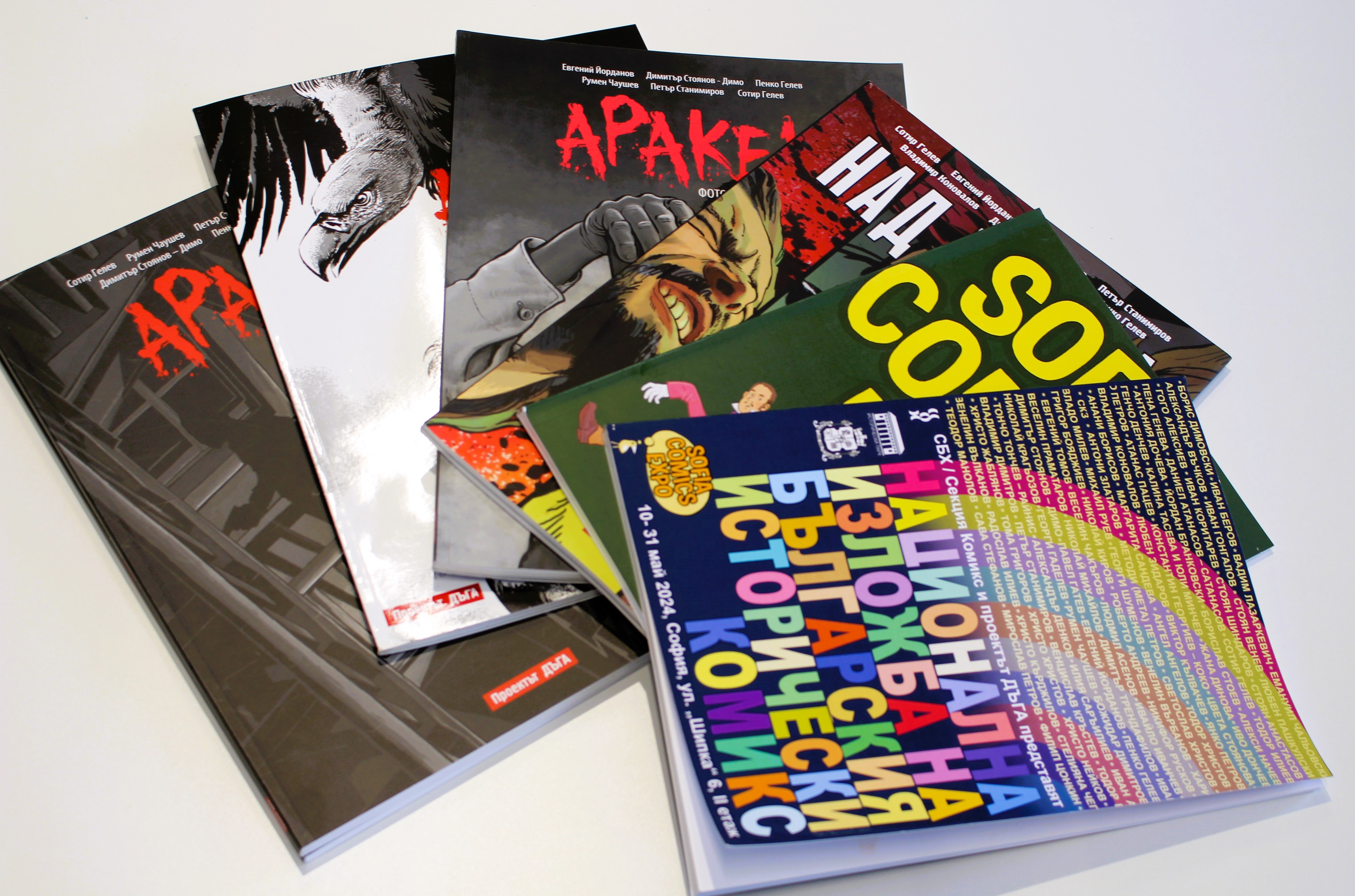
We are proud to present the latest donation to the library, which beautifully complements the Fourth National Exhibition of Bulgarian Comics, which we opened on April 1 at the Museum of Humor and Satire.

The collection contains:

Four parts of the emblematic comic series “Arakel”;

Edition “Over the Rainbow 2”;

Catalogue of  the Third Exhibition of Bulgarian Comics;

Catalogue of the National Exhibition of Bulgarian Historical Comics

The list of names of individuals involved in the realization of these editions and events is long, but the Museum is happy to invite you to meet them through the journey into the world of comics captured in the pages. The artists, members of the “Comics” section, promote Bulgarian comics as an important part of contemporary European and world culture. The world of comics is vast, but firmly rooted in its foundation – a story in pictures. It is here that literature and fine art meet. Skillfully combined, they complement each other to bring overall aesthetic pleasure.

The path taken by Bulgarian comics is extremely interesting. Tracing its history, we curiously discover authors and artists who we usually associate with other fields. The publication of comics also undergoes quantitative changes over time, but this fact does not hinder the interest in this type of art. His works easily take the form of periodicals, or are placed in such, successfully fit into the short story of the poetic work, as well as into the space of the novel.

The donated literature is a valuable addition to the space allocated for the ninth art in our library. The goal is for everyone to discover in comics not only the visual product, but also to learn more about its history – both in Bulgaria and around the world.

We express our sincere gratitude to the Comics Section of the Union of Bulgarian Artists and the Rainbow Project Association for the donation, and we gladly accept the responsibility, in turn, to share these valuable books with you, fans of comics.

The donated publications are available to visitors in the Museum Library.

How do we make public spaces truly accessible? The AccesS project in GabrovoHow do we make public spaces truly accessible? The AccesS project in Gabrovo

What does it mean for an environment to be truly accessible? Is it about ramps and elevators, or is it something deeper – something that shapes the way people move, connect, and experience a shared space? These are the questions at the heart of AccesS, a European project that explores new approaches to urban accessibility, active mobility, and inclusive design. Gabrovo is one of six locations in Europe where innovative accessibility solutions will be tested, and the Christo and Jeanne-Claude Center has been selected as a key pilot site. Unlike the other cities in the project – located in Spain, Italy, the Netherlands, and Switzerland – Gabrovo’s site has not yet undergone renovation. This makes it a special opportunity: instead of adapting an already completed space, we have the chance to integrate accessibility from the very foundation of the redesign.


But how do we define accessibility in a way that is meaningful? To answer this, we conducted a series of in-depth interviews with key figures whose perspectives shape the reality of urban spaces. These included architects, urban planners, social workers, disability rights advocates, and cultural leaders, each bringing useful insights into the challenges and possibilities of inclusive design.

Some key takeaways emerged from these conversations. Accessibility is not just about technical compliance but about how people experience a space. Many urban environments, including in Gabrovo, are designed with the assumption that most people move in the same way. But what happens when someone uses a wheelchair? When a person with visual impairments tries to navigate an unfamiliar area? When a parent with a stroller finds themselves faced with a series of high curbs?


Architects pointed out that accessibility is often treated as a regulatory obligation rather than an essential design principle. Instead of integrating it seamlessly, projects tend to “add” accessible elements as an afterthought. One of the most striking observations came from an architect who noted that most designers have never truly imagined what it feels like to navigate a space with mobility restrictions – a perspective that, if adopted, could radically change the way we build.


Social workers and disability advocates highlighted the lack of real social integration for people with disabilities. Beyond the physical challenges of urban mobility, there is an even deeper issue: the way society includes or excludes individuals from public life. They shared stories of how differently abled children often lack opportunities to engage in creative and cultural activities simply because the spaces are not designed with them in mind.


From these discussions, it became clear that accessibility must be approached holistically. It is about the space itself, the way people reach it, and how they interact with it. For the Christo and Jeanne-Claude Center, this means rethinking the entire visitor experience, from arrival points and pathways to staff training and programming  that ensures true inclusivity.


This is just the beginning. As the AccesS project progresses, the insights gathered will inform the architectural brief for the Center’s renovation and contribute to broader urban planning discussions in Gabrovo. Real accessibility is not about making small modifications – it is about shifting perspectives. Follow our journey as we continue to explore how cities can become truly accessible and inclusive to all. What does accessibility mean to you? Let’s start the conversation.

Интервю с Кремена Антонова, зам. председател на Женско благотворително дружество „Майчина грижа”, снимка от Илина Пенева
Architect Maria Hlebarova presents a project for improvement of the riverside area along the Yantra River in Gabrovo, photo by Ilina Penevaва
Детайл от проект за благоустрояване на крайречната зона по река Янтра в Габрово, снимка от Илина Пенева
Detail of the project for the improvement of the riverside area along the Yantra River in Gabrovo, photo by Ilina Peneva
Интервю с Кремена Антонова, зам. председател на Женско благотворително дружество „Майчина грижа”, снимка от Илина Пенева
Interview with Kremena Antonova, deputy chairwoman of the Women’s Charitable Society “Mother Care”, photo by Ilina Peneva
Среща с Росица Димитрова, директор на Дневен център за пълнолетни лица с увреждания, снимка от Илина Пенева
Meeting with Rositsa Dimitrova, Director of the Day Care Center for Adults with Disabilities, photo by Ilina Peneva

53 YEARS OF HUMOR: WE CELEBRATE WITH SMILES AND INSPIRATION53 YEARS OF HUMOR: WE CELEBRATE WITH SMILES AND INSPIRATION

According to one study, people are happiest at 53: it is assumed that they have achieved what they wanted, the children have grown up and they have time for themselves.

According to another, up to this age you are young, once you pass it you are already settled, calm and wise.

53 is a rather interesting number – it’s after 50 (aiming for 100), natural… – there are many more characteristics with which to describe and define it.

For us, its most important value is that this year the Museum of Humor and Satire reached it. We don’t know if the research also applies to museums, but since they, like any institution, are composed of people as their most integral parts, we think that it cannot but affect everyone connected with it.

The Museum of Humor and Satire invites you to its 53rd birthday and we hope to fill you with a lot of happiness, youth, freshness and interesting experiences in the early spring!

We hope that the Day of Joke and Lie in our country – a lie not as not telling the truth, but as an opportunity for fantasy, mood and changing roles for at least one day a year – will make you feel different, learn new things and have real fun.

Come visit us on our Open Day!

On April 1, with a festive program filled with creativity and lots of fun, we celebrate 53 years since the founding of our museum.


Program:

10:00 – 12:00

Little Actors, Big Smiles – onstage: children from Gabrovo kindergartens,

Hall 3 Stefan Fartunov

10:00 – 12:00

In the Service of Laughter – a meeting of colleagues with history – a Gabrovian party of people who made everything possible

13:00 – 15:00

Fun Museum Search Party – a family game with emotions for the whole family!

16:00 – 17:30

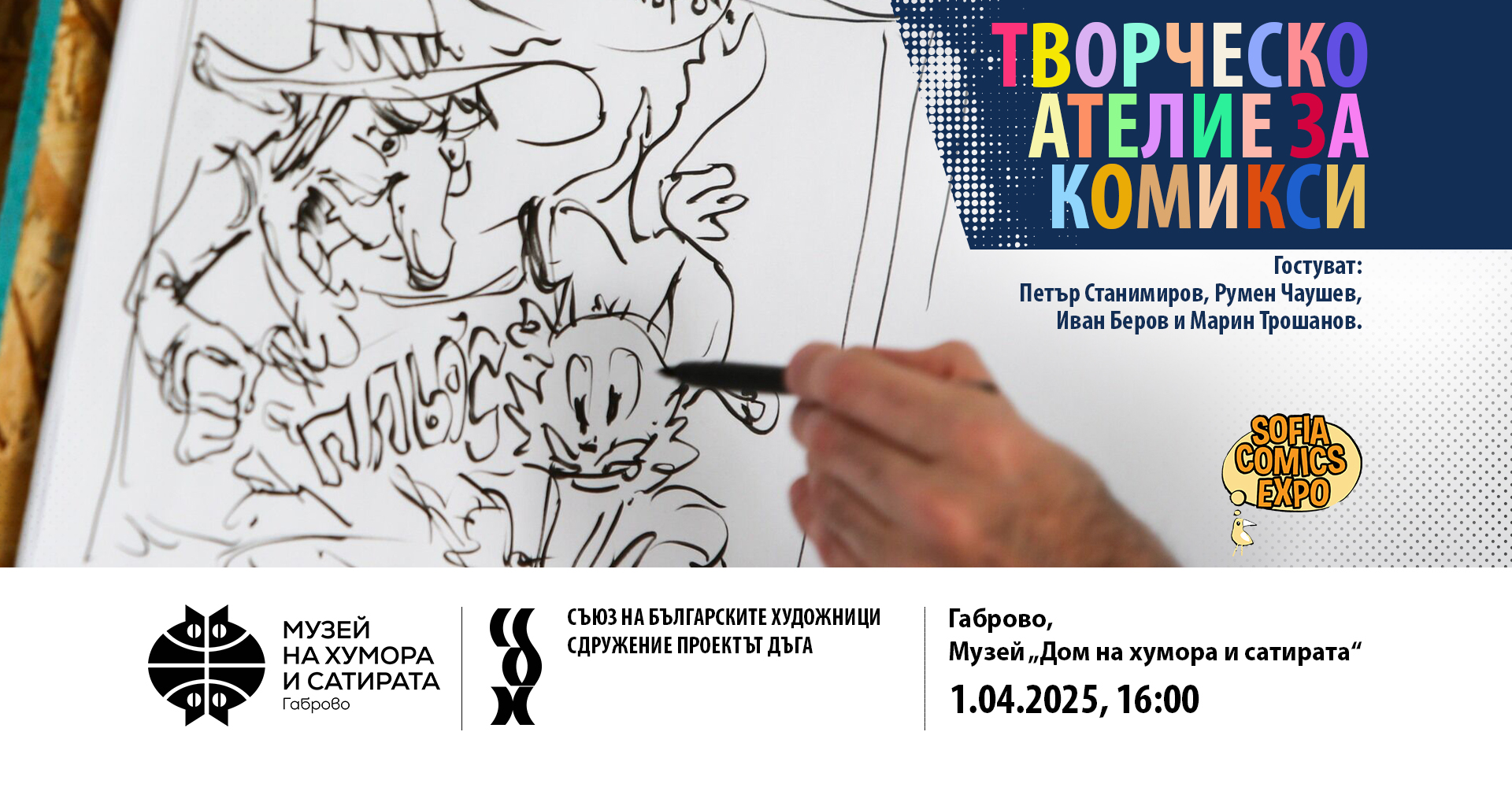
Creative workshop for comics with artists Petar Stanimirov, Rumen Chaushev, Ivan Berov and writer-screenwriter Marin Troshanov,

Hall 3 Stefan Fartunov

18:00

Opening of the Fourth National Exhibition of Bulgarian Comics, Hall 3 Stefan Fartunov

Entrance is free!

Don’t miss the opportunity to immerse yourself in the world of humor and satire and spend an unforgettable day with us!

We are waiting for you!


On April 1, 2025, the Museum of Humor and Satire will go beyond the borders of Gabrovo.

We will be visiting the Peter Stupov Regional Library in Targovishte with Masters of Bulgarian Cartoons from the 20th and 21st Centuries – a representative exhibition from our collection!

Masters of Bulgarian Cartoons from the 20th and 21st Centuries presents the audience with works by both classics in the genre and contemporary authors, known as winners of a number of prestigious international awards. The topics range from social and political irony to funny moments from everyday life, and all the works impress with masterful drawing and a subtle sense of humor.

But that’s not all! We will also virtually join the Sea Crabs Humor and Satire Club – part of the Burgas Writers’ Community. With a special video message, we will join their program to celebrate April Fool’s Day.


JOIN THE ULTIMATE COMIC BOOK WORKSHOP ON APRIL 1stJOIN THE ULTIMATE COMIC BOOK WORKSHOP ON APRIL 1st

On the festive April first, at 4:00 PM, come to a creative comic book workshop

with artists Petar Stanimirov, Rumen Chaushev, Ivan Berov and writer-screenwriter Marin Troshanov.

We will draw together and discuss the process of creating illustrated stories – from the first word to the last stroke.

The event accompanies the Fourth National Exhibition of Bulgarian Comics.

Admission is free.


Petar Stanimirov is one of our most productive comic book artists. He worked for the original edition of the Daga (Rainbow) magazine from 1979 until its closure in 1992. During this time, he drew six series, including Bubachko, Yantar and Treasure Island. In the 1990s, he created the comic book periodical Stories in Pictures. Later, he founded the publishing houses Pulsar and Mega, through which game books are popularized in Bulgaria. For many years, he also worked in the gaming industry as an art director at the Haemimont studio. After 2010, together with colleagues from the Daga magazine, he participated in the founding of the Project Daga Association, through which new comic books began to be published, including Nad Dagata (Over the Rainbow) and the Arakel series. 

Rumen Chaushev also worked for the original edition of the Daga magazine, for which he drew the series Yavor and The Girl from Earth. His drawing style and the stories in which he involves his characters Yavor and Alice are extremely recognizable and make them some of the most emblematic for the publication. In the early nineties, he drew the comic book Secret Under the Sea, and later illustrated numerous children’s books and textbooks. In 2010, he was a main driving force in the creation of the Project Daga Association and the revival of Bulgarian comics. Since then, he has drawn comics for the Nad Dagata publications, the Arakel and Vekovnitsi series. He has actively participated in the organization of over ten major comic exhibitions across the country.

Ivan Berov is an illustrator and animator. In his work, he is involved in the creation of scenarios, comics, storyboards, animated clips, interactive applications and games. He has participated in the creation of animation projects at Golpy studios and Zmey studio. He has drawn comics for the Komixer and Vekovnitsi publications. He has published stories in the third generation of the Daga magazine in 2022. He participated as a technical assistant on the Wormworld Saga comic series. Since 2021, he has served as deputy secretary of the comics section of the Union of Bulgarian Artists.

Marin Troshanov is a freelance writer and screenwriter. He works on various fantasy and journalistic works. He is the author of several very successful novels, including the trilogy Lamia Ltd and Emmy and the Shadow Thief. Together with Evgeni Proykov and the artist Petar Stanimirov in 2012 he created the comic Damga, which in a tough competition with 286 contenders from 29 countries won the award for best traditional comic at the international festival in Belgrade. In the next few years, again in collaboration with Petar Stanimirov and the screenwriter Anton Staykov, he created the series of children’s books about the Robot Chapek and his travels in space. They combine prose, illustration and comics in an innovative way for the Bulgarian market. Marin is the winner of the prestigious award of the National Palace of Culture, the National Book Center and the Peroto Literary Club in the Children’s Literature category (2019) and the national Konstantin Konstantinov award in the Author category (2020).


THE FOURTH NATIONAL EXHIBITION OF BULGARIAN COMICS IS A GUEST AT THE MUSEUM OF HUMOR AND SATIRETHE FOURTH NATIONAL EXHIBITION OF BULGARIAN COMICS IS A GUEST AT THE MUSEUM OF HUMOR AND SATIRE

The Museum of Humor and Satire, the Comics section of the Union of Bulgarian Artists and the Project Daga Association

invite you on April 1st at 6:00 PM in the Stefan Fartunov hall

to the opening of the Fourth National Exhibition of Bulgarian Comics.

On our special day, at 4:00 PM, come to our Creative Comics Workshop with artists Petar Stanimirov, Rumen Chaushev, Ivan Berov and writer-screenwriter Marin Troshanov. We will draw together and discuss the process of creating illustrated stories – from the first word to the last stroke.

The exhibition is dedicated to historical comics and includes 148 panels with works by 100 Bulgarian authors – from the pioneers of the genre from the mid-1940s such as Alexander Denkov, Vadim Lazarkevich and Lyuben Zidarov to contemporary artists.

You will see works created for popular publications such as the magazines Daga (Rainbow) and Wonderful World, the newspaper Stories in Pictures with favorite authors such as Venelin Varbanov, Evgeniy Yordanov, Petar Stanimirov and Stoyan Shindarov.

Many examples from the years of transition are also presented – the illustrated adventures of Ivaylo Ivanchev in the Fyut magazine, the publications of David Salaria with drawings by Penko Gelev, historical comics about kings and voivodes by artists such as Alexander Vachkov and Veselin Chakarov. The exhibition also includes numerous works after 2000, created during the period of renewed interest in the genre.

During the exhibition, you can also watch the documentary Daga – Stories in Pictures, produced by Four Hands Studio in 2018. The film follows the history of the iconic Daga magazine and introduces us to many of the artists who created comics for it. Started in 1979, the magazine existed until 1992 with a total of 42 issues and a circulation reaching 300,000 copies. Daga is a unique publication for the entire former socialist bloc, and some of its characters live on in the memories of readers to this day.

Director: Maria Nikolova

Producers: Sotir Gelev, Penko Gelev

Gekkon Animation Studio, Four Hands Studio

WORLDS. IVAN HRISTOV – GROGAWORLDS. IVAN HRISTOV – GROGA

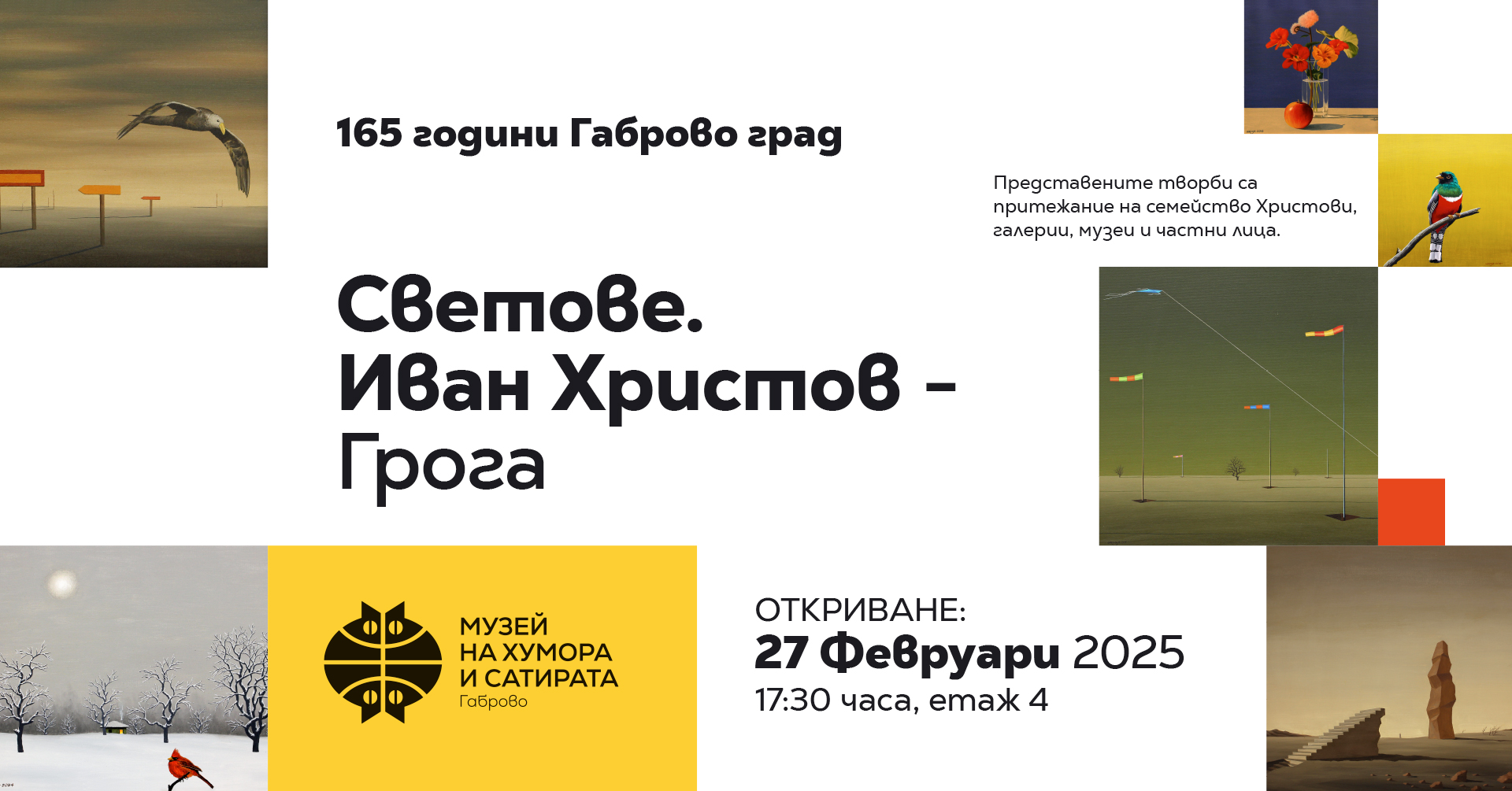
Opening: February 27 (Thursday), 5:30 p.m.

Floor 4, Museum of Humor and Satire

The exhibition will remain until July 31, 2025.

The Museum of Humor and Satire presents “Worlds” – a large-scale retrospective exhibition of the beloved Gabrovo painter Ivan Hristov – Groga (1942 – 2024). Located on the entire fourth floor, the exhibition includes over 100 works and traces various stages in his professional development.

The exhibition is part of the celebrations marking 165 years since Gabrovo was declared a city.

The work of Ivan Hristov – Groga is a true revelation in the world of art. In a photorealistic style and with poetic sensitivity, he saturates his pictorial worlds with unique depth and significance.
Nature is his favorite subject. The artist depicts it not just as a background, but as a living organism. Particularly impressive are his winter landscapes, filled with cool tones and ethereality, evoking deep emotions and reflections on the transience and fragility of life.
Groga creates “portraits” of birds, with a refined sensitivity to their beauty.
His painting is not only a means of aesthetic revelation, but also a public position and a warning about human activities that destroy nature.

The exhibition features paintings from the collections of the Hristov family, the Museum of Humor and Satire, Hristo Tsokev Art Gallery – Gabrovo, Aspect Gallery – Plovdiv, Djurkovi Gallery – Plovdiv, Vidima Gallery – Sevlievo, Assen and Iliya Peykovi Art Gallery – Sevlievo, the Specialized Museum of Woodcarving and Iconography Art – Tryavna, Otets Paisii 1928 Art Gallery in the village of Dumnitsi, and private individuals.

The exhibition includes a screening of 3 documentaries, which provide the audience with the opportunity to get to know the artist’s personality.

Ivan Hristov – Groga was born in the Gabrovo village of Dumnitsi into a family with rich traditions in stonemasonry. An alumnus of the Aprilov High School, in 1969 he graduated from the University of Veliko Tarnovo, majoring in Poster Art.
For over a quarter of a century, Groga devoted himself to teaching at the Secondary Art School in Tryavna, inspiring generations of young artists.
Despite his specialization in posters, he remained faithful to his “old love” – ​​painting, turning it into his main means of expression.
Groga’s creative legacy includes dozens of solo exhibitions and successful appearances in prestigious forums.
He is an active and highly appreciated participant in 14 editions of the Gabrovo Biennial of Humor and Satire in Art, with distinctions in 1999 – third prize for painting, in 2005 – the special prize for painting of the Ministry of Culture.
In 2005, 2006 and 2013, the artist won the Hristo Tsokev Аward of the Municipality of Gabrovo.
In 2014, he was awarded the Honorary Badge of Gabrovo for his overall contribution to the town’s cultural life.

Delving Into Theory and Practice: School for Curators 2Delving Into Theory and Practice: School for Curators 2

As the program unfolded, three groups were formed to work on specific exhibition projects: Textile, Skate Culture, and Sin.

The Textile group drew inspiration from the historical legacy of the Textile Technicum, which for decades trained specialists for Gabrovo’s textile industry, turning it into a key economic engine for the region. Interweaving archival materials with a contemporary curatorial perspective, the exhibition proposes to combine historical documents, oral histories, and works by international and Bulgarian artists to pose critical questions about the ecological and ethical impact of the textile industry on a global scale.

In contrast, the Skate group focused on mobility, subversion, and the reclamation of urban spaces. This team traced skateboarding’s origins in Bulgaria from the 1980s to the present day, using it as a lens to examine broader cultural and social dynamics. The exhibition concept combined archival materials, interviews with skaters, and collaborations with local artists and designers to map the evolution of skateboarding as both an art form and a lifestyle. Skating became a metaphor for resistance, fluidity, and the negotiation of public space, tying together urban planning, design, and the everlasting charm of countercultural movements.

The Sin group, connecting with the Museum of Humor and Satire, reimagined its historic “Sin” collection from 1973, featuring 46 fresco reproductions from Bulgarian religious sites like Rila and Bachkovo monasteries. Using the original exhibition’s themes – moral guidance, the Church’s fight against witchcraft, and patriotic resistance during the Ottoman period – they reframed these narratives through contemporary art and critical theory. Their project questioned sin’s evolving role: is it rebellion, necessity, or a reflection of human imperfection? By juxtaposing the satirical essence of the frescoes with modern perspectives, the group explored whether today’s transgressions are acts of resistance or performances shaped by societal norms.

Each project took shape thanks to the collaborative efforts of the participants and their dedicated mentors. Svetlana Kuyumdzhieva, Vessela Nozharova, Margarita Dorovska, Stanimir Stoyanov, and Rossen Roussev generously shared their expertise, ensuring that the future curators could refine their concepts and overcome practical challenges with thoughtfulness, creativity, and respect for the art scene. By the time of the final presentations in July, the projects had evolved into comprehensive studies with plans for future realization.

In essence, the School for Curators at the Christo and Jeanne-Claude Center achieved what few programs dare to do. It asked its participants not just to curate objects but ideas, relationships, and conversations. As the projects move from concept to realization, the echoes of those weekly lectures and collaborative moments will undoubtedly resonate. This School was not a beginning nor an end – it was a catalyst for what comes next.

photos by Boryana Pandova